
Quick answer
What to remember about DASH
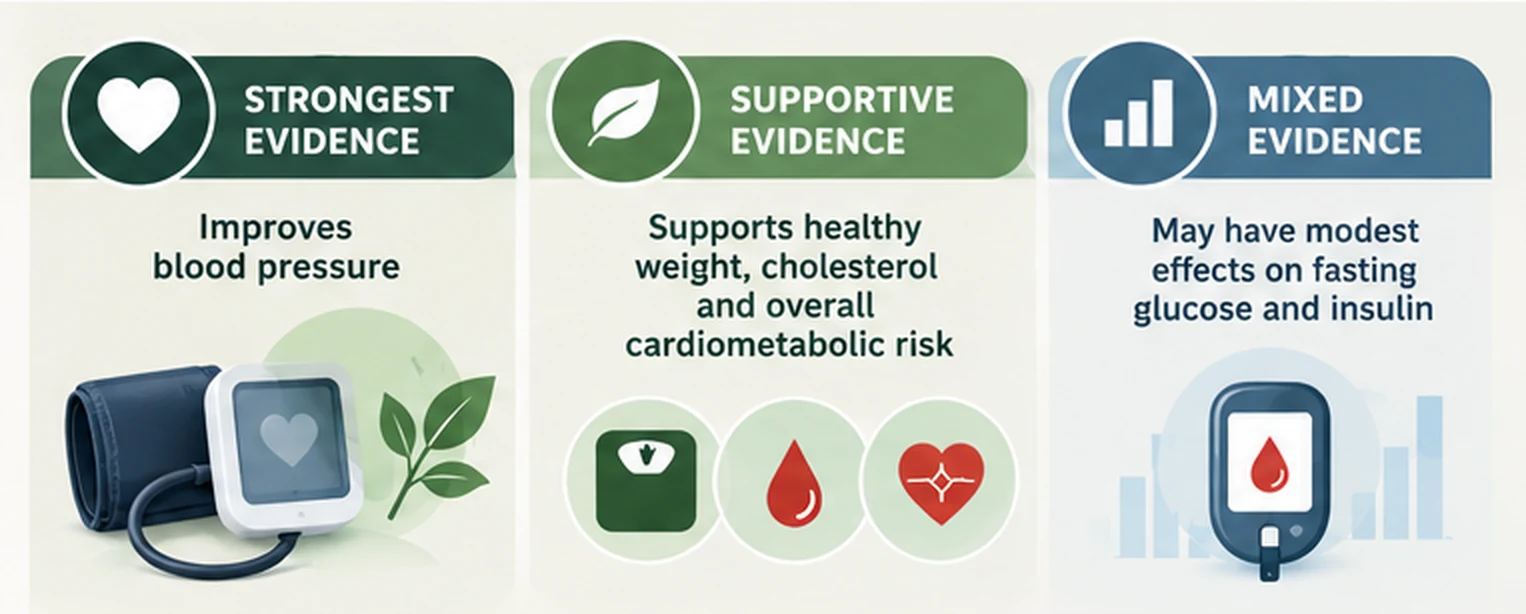
- DASH is best established as a blood-pressure eating pattern. Randomized trials consistently show reductions in blood pressure.
- Sodium still matters. DASH and lower sodium can have additive blood-pressure benefits.
- It can fit diabetes care. The pattern favors fiber-rich foods, satisfying protein, and fewer sugary drinks.
- Glucose results are not uniform. Direct glycemic outcomes are mixed across trials and meta-analyses.
- Start where life is. One meal, grocery swap, or sodium habit is a useful beginning.
One small question to start with
Which meal this week feels easiest to adjust: breakfast, a work lunch, dinner, or a snack? Start there instead of trying to change every meal at once.
What is the DASH diet?
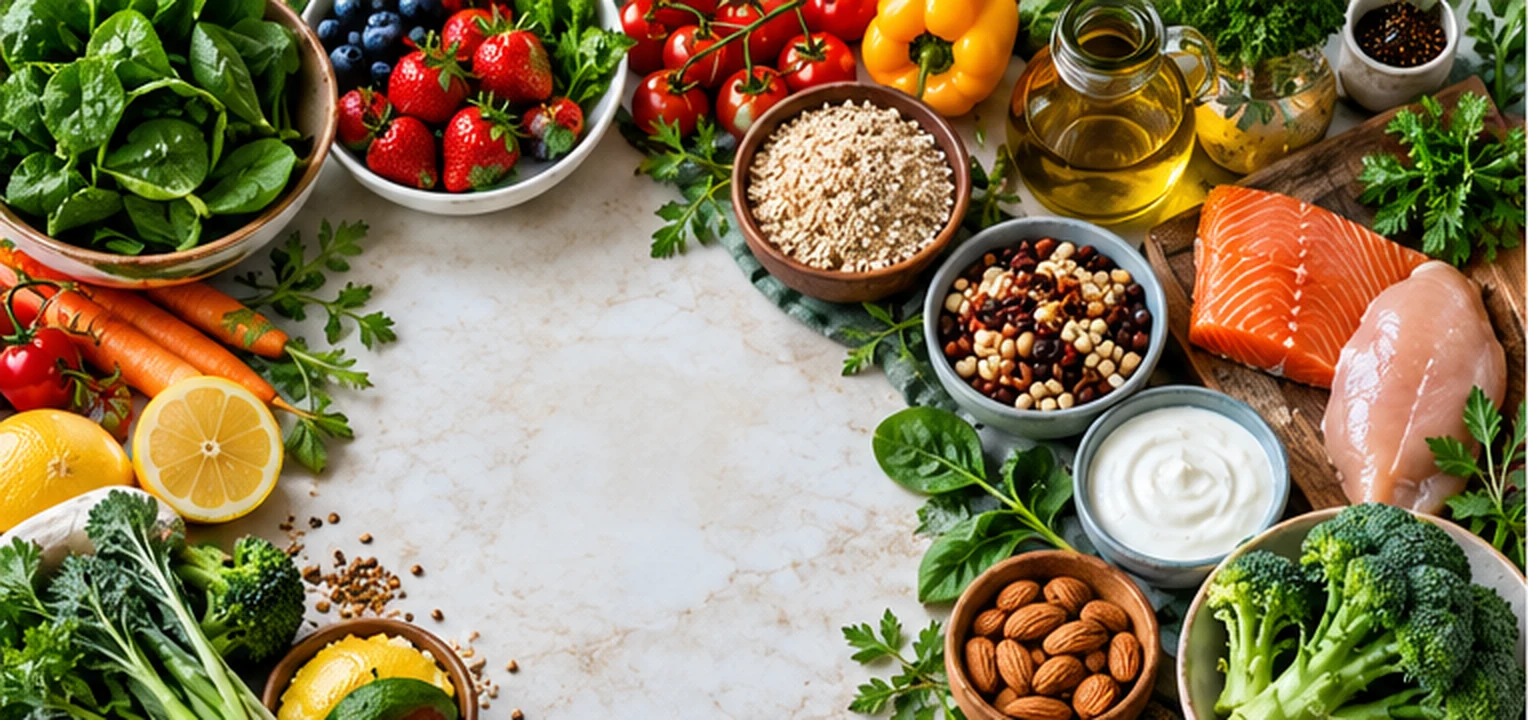
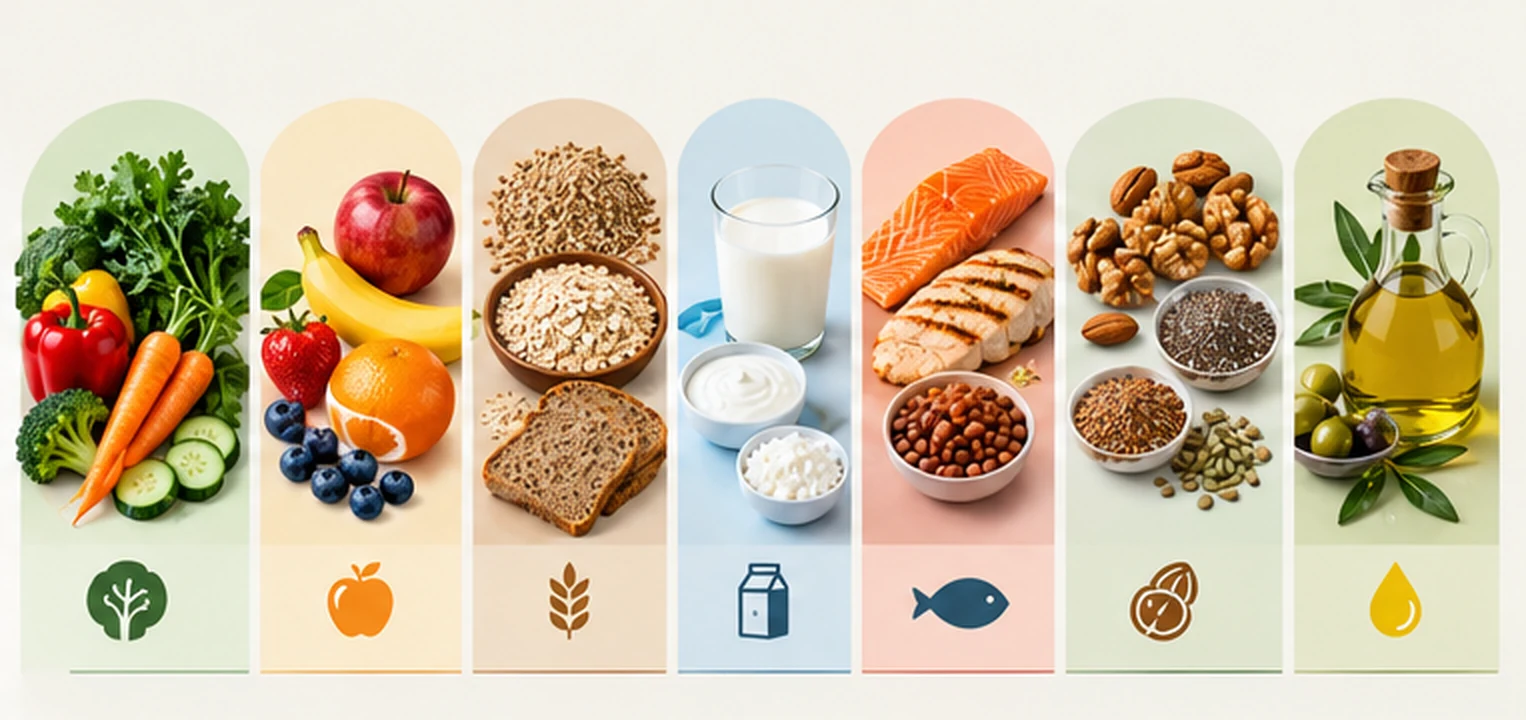
DASH—Dietary Approaches to Stop Hypertension—is a flexible eating pattern developed and tested in controlled feeding research. It emphasizes vegetables, fruit, whole grains, beans, nuts, lower-fat dairy, fish, poultry, and vegetable oils while limiting excess sodium, saturated fat, sugar-sweetened drinks, and heavily processed foods.
For a typical 2,000-calorie example, the National Heart, Lung, and Blood Institute (NHLBI) lists vegetables, fruit, grains, and low-fat dairy daily, with beans, nuts, and seeds regularly through the week. Those are examples, not a requirement that every person count servings.
A pattern, not a purity test
Frozen vegetables, canned beans, whole-grain bread, yogurt, canned fish, leftovers, restaurant meals, and culturally familiar foods can all belong. For lower-sodium canned and budget choices, practical comparisons matter more than perfection.
Why can a DASH-style pattern help blood pressure?
DASH changes several parts of the food pattern at once: it emphasizes potassium-, magnesium-, calcium-, and fiber-containing foods, reduces saturated fat, and can be paired with lower sodium. The evidence is for the overall pattern—not for taking individual mineral supplements as a substitute for it. NHLBI’s DASH eating plan is a useful practical reference.
What does the research show for blood pressure?
This is where DASH has its strongest evidence. In the original 1997 randomized feeding trial, the DASH-style combination diet lowered blood pressure more than the control diet while weight and sodium were held relatively constant. The original DASH trial established the pattern’s blood-pressure effect.
The DASH-Sodium trial found that both the eating pattern and sodium reduction mattered, with the combined approach producing the largest reductions. Meta-analyses reach different average numbers because populations and comparison diets differ, but the direction is consistent: DASH lowers blood pressure, and the size of change is not identical for everyone.
DASH is not primarily a weight-loss diet. Still, controlled-trial syntheses find modest average improvements in weight, waist size, LDL cholesterol, or triglycerides in some settings. That is why it is often described as a cardiometabolic pattern.
What do pooled trial results look like?
A 2020 review of 30 randomized trials including 5,545 participants found average differences of about 3.2 mm Hg lower systolic and 2.5 mm Hg lower diastolic blood pressure with DASH versus control diets. These are group averages—not a promise for any one person. Baseline blood pressure, sodium intake, medications, adherence, sleep, activity, body weight, and other health conditions can all affect individual results. Read the 2020 review.
How quickly might blood pressure change?
Controlled feeding studies observed changes over weeks while participants received carefully planned foods. Everyday eating is less controlled, so an article cannot predict a timeline or result for an individual. If you track blood pressure, use the information to support a conversation with your clinician rather than changing medication on your own.
DASH and diabetes: useful, but the science needs nuance
DASH should not be presented as a guaranteed way to control blood sugar, improve insulin sensitivity, reverse diabetes, or replace medication. A small randomized crossover trial in people with type 2 diabetes found improvements in several measures during its DASH period, but it was small and short. In contrast, a 2021 meta-analysis of 54 randomized trials found improvements in weight, waist size, blood pressure, total cholesterol, and LDL cholesterol, but no statistically significant pooled effect on blood glucose, insulin, or HOMA-IR. A 2026 metabolic-syndrome meta-analysis likewise did not find a significant fasting-glucose reduction.
For diabetes, the practical case for DASH is still meaningful: blood pressure matters, and vegetables, beans, whole grains, nuts, lean proteins, and unsaturated fats can work in individualized meal plans. Carbohydrate responses also vary with portions, medication, activity, sleep, stress, and the meal itself. Explore how glucose and insulin work after a meal, a simple blood-sugar explainer, and food sequencing for related context.
So what does DASH mean if you have diabetes?
DASH is not inherently low carbohydrate. Carbohydrate amount, grain choices, fruit and dairy portions, meal timing, and protein choices can be adapted to your needs; there is no single carbohydrate percentage that works for everyone. One whole-meal shift might be moving from a refined-carbohydrate meal plus a sugary drink toward a personally appropriate carbohydrate portion, vegetables, beans or another satisfying protein, an unsaturated fat, and water or another lower-sugar drink. That is not about “good” or “bad” foods—it is about a meal pattern that fits your life and care plan.
Sodium without the confusion
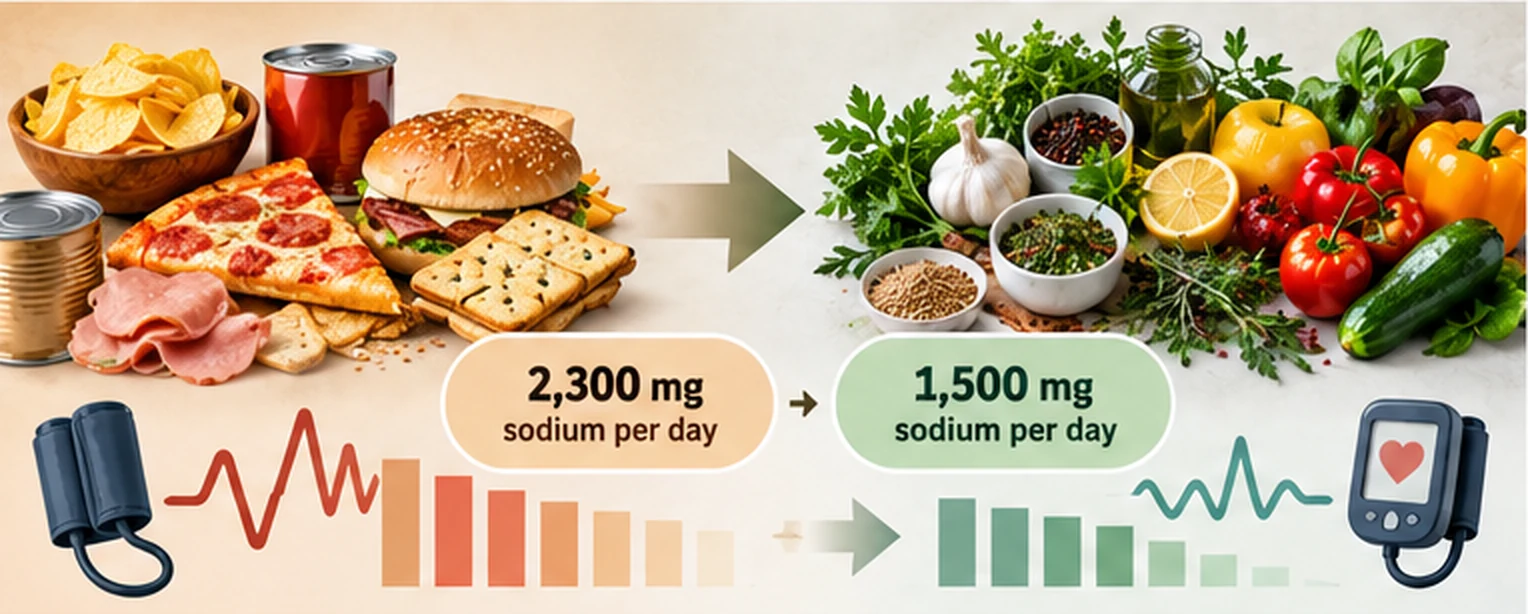
The DASH pattern and sodium reduction are related, but they are not the same thing. NHLBI uses 2,300 mg of sodium per day as a standard DASH limit and notes that 1,500 mg per day can lower blood pressure further. It is not a universal prescription. Packaged and restaurant foods—sauces, deli meats, soups, breads, snacks, and prepared meals—often contribute more sodium than the saltshaker.
- Compare similar products instead of memorizing “good” and “bad” brands.
- Choose no-salt-added or lower-sodium options when they work for you.
- Rinse canned beans or vegetables when appropriate, and use herbs, citrus, vinegar, garlic, and spices for flavor.
Try a label-reading experiment
Choose two versions of one food you already buy. What is the serving size, sodium per serving, and how often do you actually eat it? A useful swap is one you will keep buying.
One important safety note: potassium
DASH is naturally potassium-rich. If you have chronic kidney disease, have been told to limit potassium, or take medicines that affect potassium balance, talk with your clinician or dietitian before intentionally increasing potassium-rich foods or using potassium-based salt substitutes.
DASH can fit a budget—and a restaurant meal
Frozen vegetables, canned beans, oats, brown rice, potatoes, bananas, seasonal fruit, peanut butter, eggs, plain yogurt, canned fish, and store-brand frozen fruit can all fit DASH. Organic or specialty “health foods” are not required. At a restaurant, options such as sauces or dressings on the side, a vegetable side, grilled or baked proteins, and water or a lower-sugar drink can be useful if they appeal to you. One meal is not a failure; the overall pattern matters more than perfection.
What does a DASH-friendly plate look like?
Build most meals around vegetables when available, add a satisfying protein, choose a carbohydrate that fits your needs, and add flavor and fats from foods such as olive oil, nuts, seeds, avocado, or fish. Water, unsweetened tea, and other lower-sugar drinks can be the default most of the time.
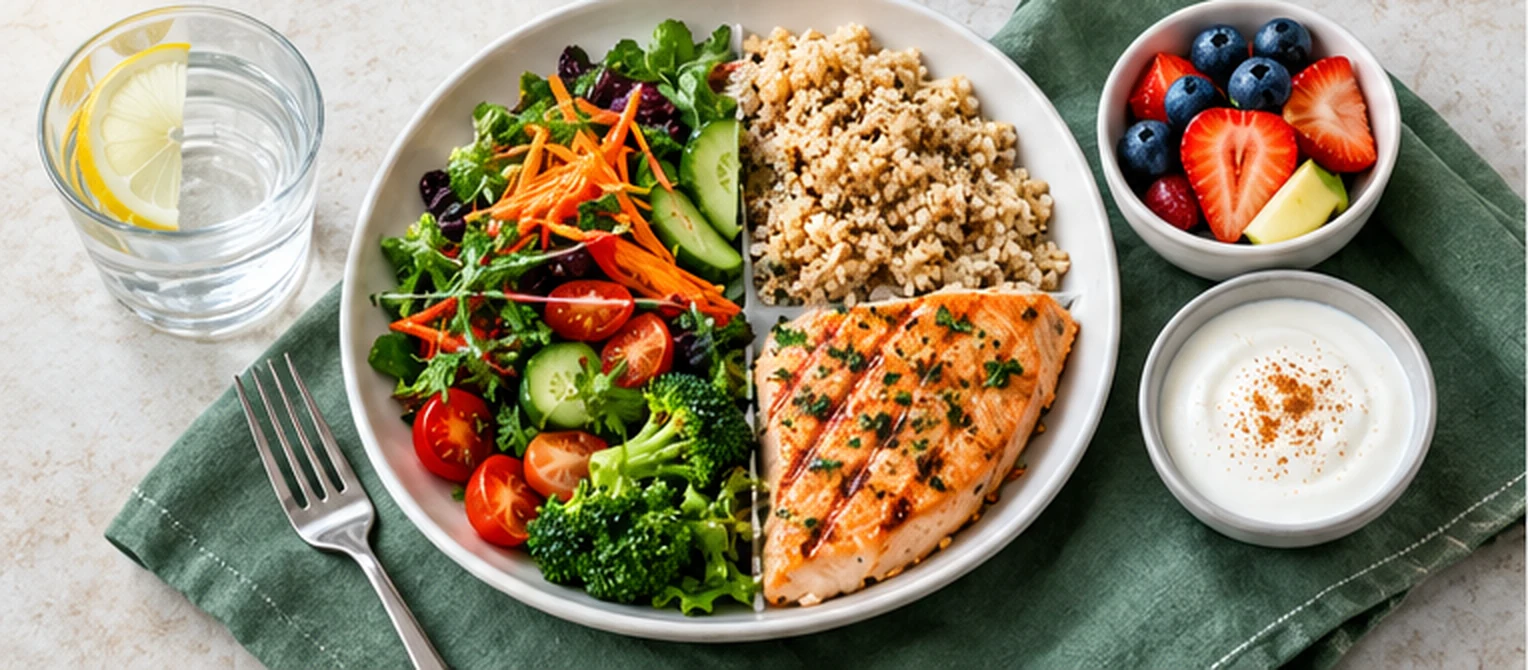
A bowl, soup, curry, taco plate, stir-fry, sandwich, or family recipe can reflect DASH principles. Read more about dietary fat quality or added sugars and sugar alternatives.
A seven-day way to start—without overhauling your life
- Add one fruit.
- Add one vegetable; frozen and canned count.
- Make one grain choice more whole-grain.
- Use beans or lentils once.
- Add unsalted nuts or seeds if they fit your needs.
- Compare sodium on one food you buy often.
- Build one complete meal: vegetables + protein + carbohydrate + satisfying flavor + a lower-sugar drink.
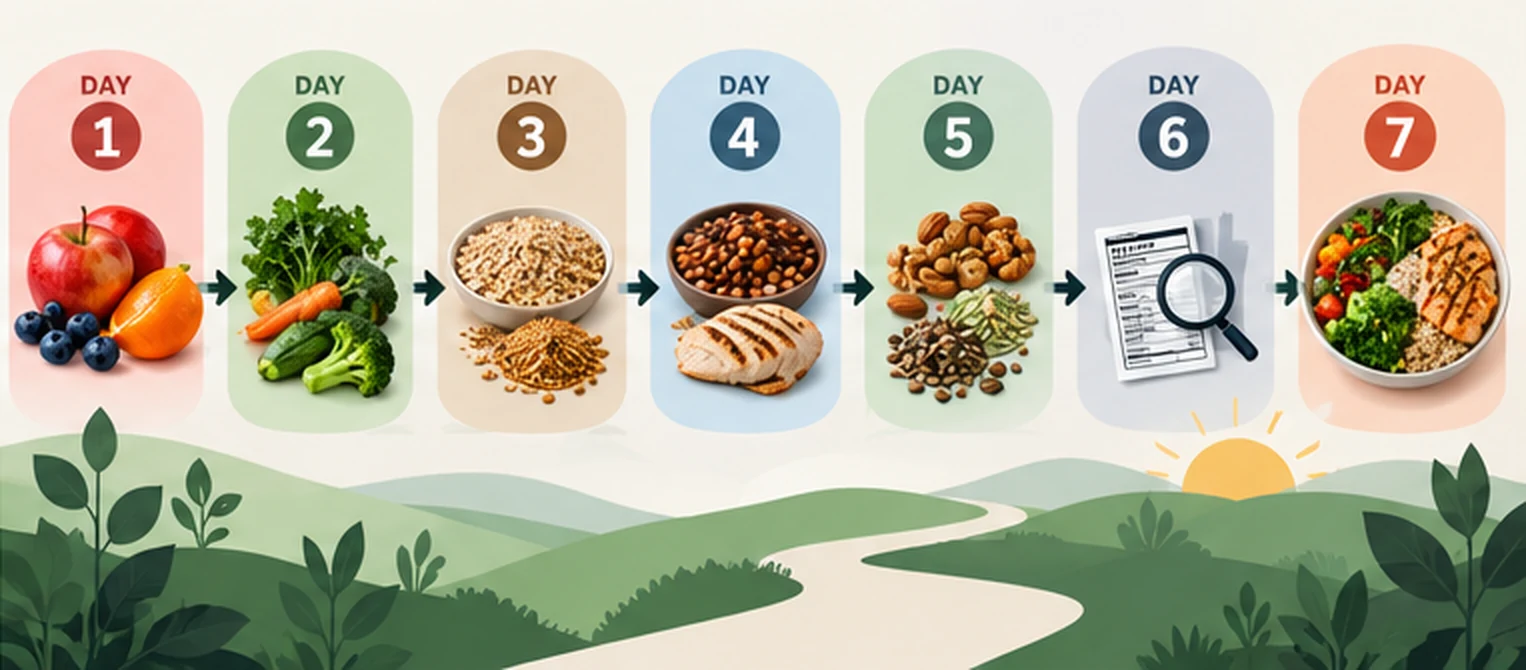
Small habits hold better than rigid rules. Consider small habits, mindful eating, or comparing eating patterns as you decide what fits your life.
DASH myths worth clearing up
Myth: DASH is a low-carb diet. Not inherently; portions and carbohydrate choices can be individualized.
Myth: DASH means no salt. DASH and sodium reduction are related, but targets are not universal prescriptions.
Myth: Frozen vegetables do not count. Frozen vegetables can be nutritious, convenient, affordable, and fully compatible with DASH.
Myth: People with diabetes cannot eat fruit. Fruit can fit; quantity and meal context can be individualized.
Myth: Sea salt solves the sodium issue. Sodium remains the main consideration for blood-pressure guidance.
DASH and Mediterranean eating: more overlap than competition
DASH originated in blood-pressure research and explicitly addresses sodium; it often includes lower-fat dairy. Mediterranean-style eating often highlights olive oil, legumes, nuts, fish, and broader regional food traditions. Both emphasize vegetables, fruit, legumes, whole grains, nuts and seeds, minimally processed foods, and unsaturated fats. They are not competing teams; a real eating pattern can use features of both. See our MIND diet overview for another related pattern.
Keep the momentum practical
Food is only one part of cardiometabolic health. Daily walking, lower-impact exercise, and support for stress and glucose belong in the larger picture. Walking safely in heat and metabolic and brain health offer more context. You can also compare DASH with the MIND diet.
Want help making one habit stick?
Memovela supports simple daily check-ins for meals, movement, hydration, and sleep.
Try Memovela on the web
Free DASH starter guide
7 Days of DASH
Grocery List, Sodium Swaps & Simple Meal Builder
You have read the science. Take the next step to the grocery store and kitchen with seven small, realistic experiments.
Get the Free GuideNo signup required.
Help keep practical health education free
Mindful Diabetes is a nonprofit. Donations support free, evidence-informed resources for people and families.
Support Mindful DiabetesScientific references
- Appel et al. A Clinical Trial of the Effects of Dietary Patterns on Blood Pressure (1997). New England Journal of Medicine.
- Sacks et al. Effects on Blood Pressure of Reduced Dietary Sodium and the DASH Diet (2001). New England Journal of Medicine.
- Juraschek et al. Effects of Sodium Reduction and the DASH Diet in Relation to Baseline Blood Pressure (2017). Journal of the American College of Cardiology.
- Saneei et al. DASH diet and blood pressure: systematic review and meta-analysis (2014). Nutrition, Metabolism & Cardiovascular Diseases.
- Filippou et al. DASH Diet and Blood Pressure Reduction (2020). Advances in Nutrition.
- Appel et al. OmniHeart randomized trial (2005). JAMA.
- Soltani et al. DASH diet on weight and body composition (2016). Obesity Reviews.
- Azadbakht et al. DASH eating plan among people with type 2 diabetes (2011). Diabetes Care.
- Shirani et al. DASH diet and risk factors for type 2 diabetes (2013). Nutrition.
- Lari et al. DASH diet on metabolic risk factors in chronic disease (2021). Nutrition, Metabolism & Cardiovascular Diseases.
- Zhao et al. DASH diet and metabolic syndrome components (2026). Frontiers in Nutrition.
- Quan et al. DASH adherence and diabetes risk—observational (2024). Endocrine.
- Salehi-Abargouei et al. DASH-style diet and CVD incidence—observational (2013). Nutrition.
- Soltani et al. DASH adherence and mortality—observational (2020). Nutrition Journal.
- Sahebkar et al. DASH Diet on Lipid Profile (2025). Current Medicinal Chemistry.
Practical DASH guidance: NHLBI DASH Eating Plan.