
Summer Walks, Hydration, and Diabetes: How to Move With the Heat Instead of Against It
Summer has a way of inviting us outside. The light lasts longer, sidewalks feel more alive, and a simple walk can become a reset for the whole body. For people living with diabetes or working to lower the risk of insulin resistance, those long summer walks can be powerful. They can support glucose awareness, cardiovascular health, mood, sleep, and the daily rhythm that keeps us connected to our bodies.
But summer movement asks for respect. Heat, humidity, dehydration, sun exposure, medications, and blood sugar changes can all interact. The goal is not to avoid activity. The goal is to move wisely: choose the right time of day, drink with intention, check in with your body, and build a routine that supports health without pushing past safe limits.
This guide continues our Pathways to Wellness series by bringing together three practical ideas: summertime, long walks, and hydration. If you want a deeper background on warm-weather diabetes care, pair this article with our guides on managing blood sugar in the summer months and staying active and healthy with diabetes during summer.
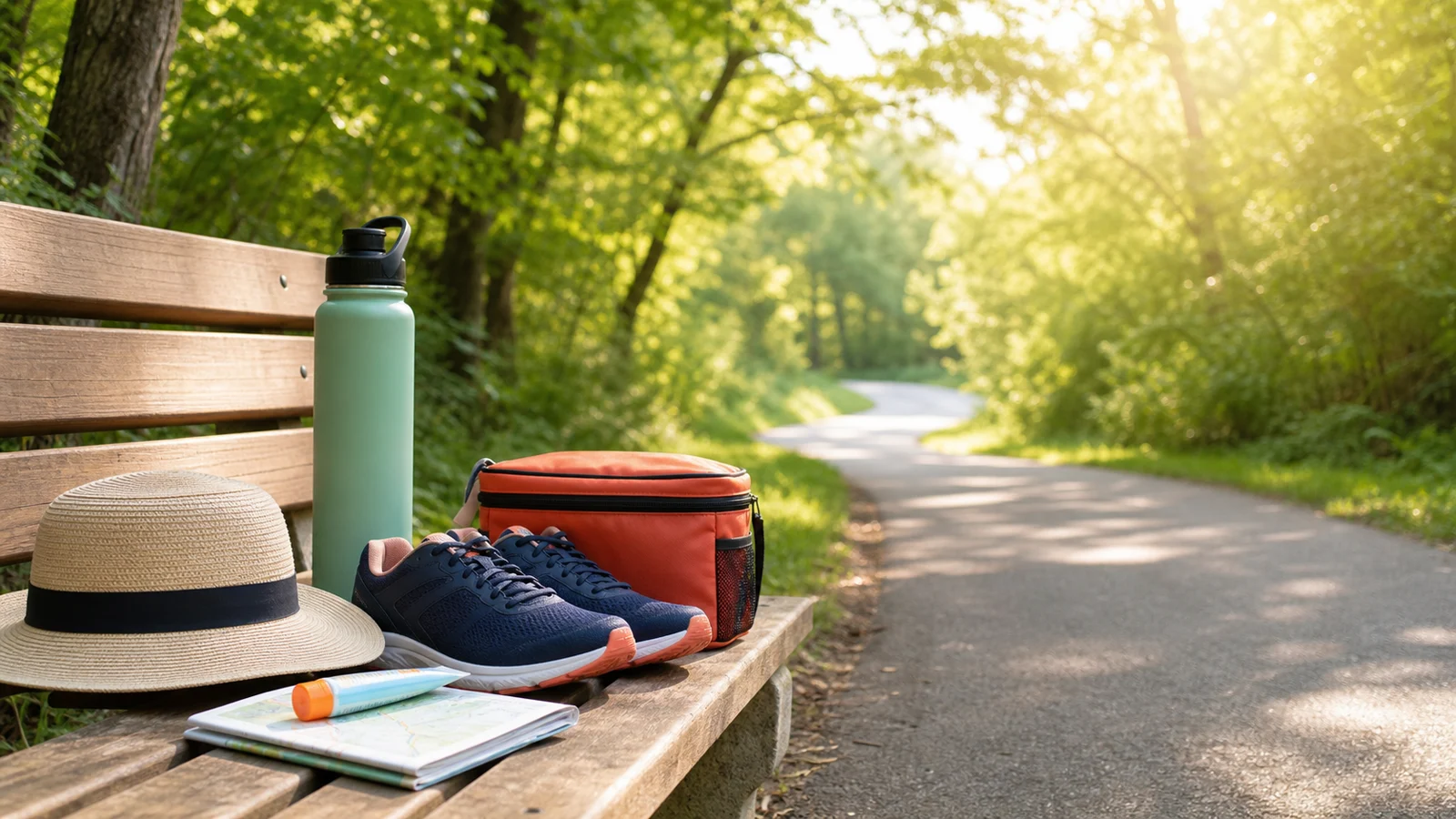
Why Walking Still Matters, Especially in Summer
Walking is one of the most accessible forms of physical activity. It does not require a gym, a complicated plan, or an expensive device. It can be gentle enough for beginners and flexible enough to grow with you. Our articles on the power of daily walking and walking for heart health both return to the same idea: small steps can become a durable health habit.
Walking regularly can help your body use insulin more effectively. It may also support your heart, blood pressure, stamina, and body weight, especially when the habit is repeated over time. If you are managing complications, taking insulin, or just getting started, it is worth asking your care team what kind of walking plan is safest for you. You can read more about walking for people with type 2 diabetes and exercise planning with diabetes.
The summer opportunity is simple: use the season's longer days to make walking easier to repeat. If midday heat is too intense, walk earlier in the morning or later in the evening. If outdoor heat is unsafe, try an indoor loop, a community center, a mall, or light low-impact exercise at home. The best routine is the one you can repeat safely.
The Heat Changes the Assignment
Heat can make exercise feel harder because your body is doing two jobs at once: moving and cooling. For people with diabetes, that cooling process may be less predictable. The CDC's guide to managing diabetes in the heat notes that diabetes-related nerve and blood vessel changes can affect sweat glands and cooling, and that dehydration can raise blood sugar. The same CDC guidance recommends drinking water, checking blood sugar before, during, and after activity, protecting medications and supplies from heat, and avoiding outdoor activity during the hottest part of the day.
Heat deserves real attention because it can make you lose water and electrolytes more quickly. That can leave you feeling weak, dizzy, or unusually tired, and it may make blood sugar harder to manage. Very hot days have also been linked with more hospital visits for serious blood sugar problems in one large study. You can keep the science close by reading about diabetes management in hot weather and heat exposure and diabetes-related hospitalization.
Think of heat as a signal to downshift, not quit. Reduce intensity. Choose shade. Shorten the route. Build rest stops into the walk. Carry water. Bring diabetes supplies if your care plan requires them. If you use insulin or medications that can affect hydration, blood pressure, or glucose, ask your clinician how summer exercise should fit your personal plan.
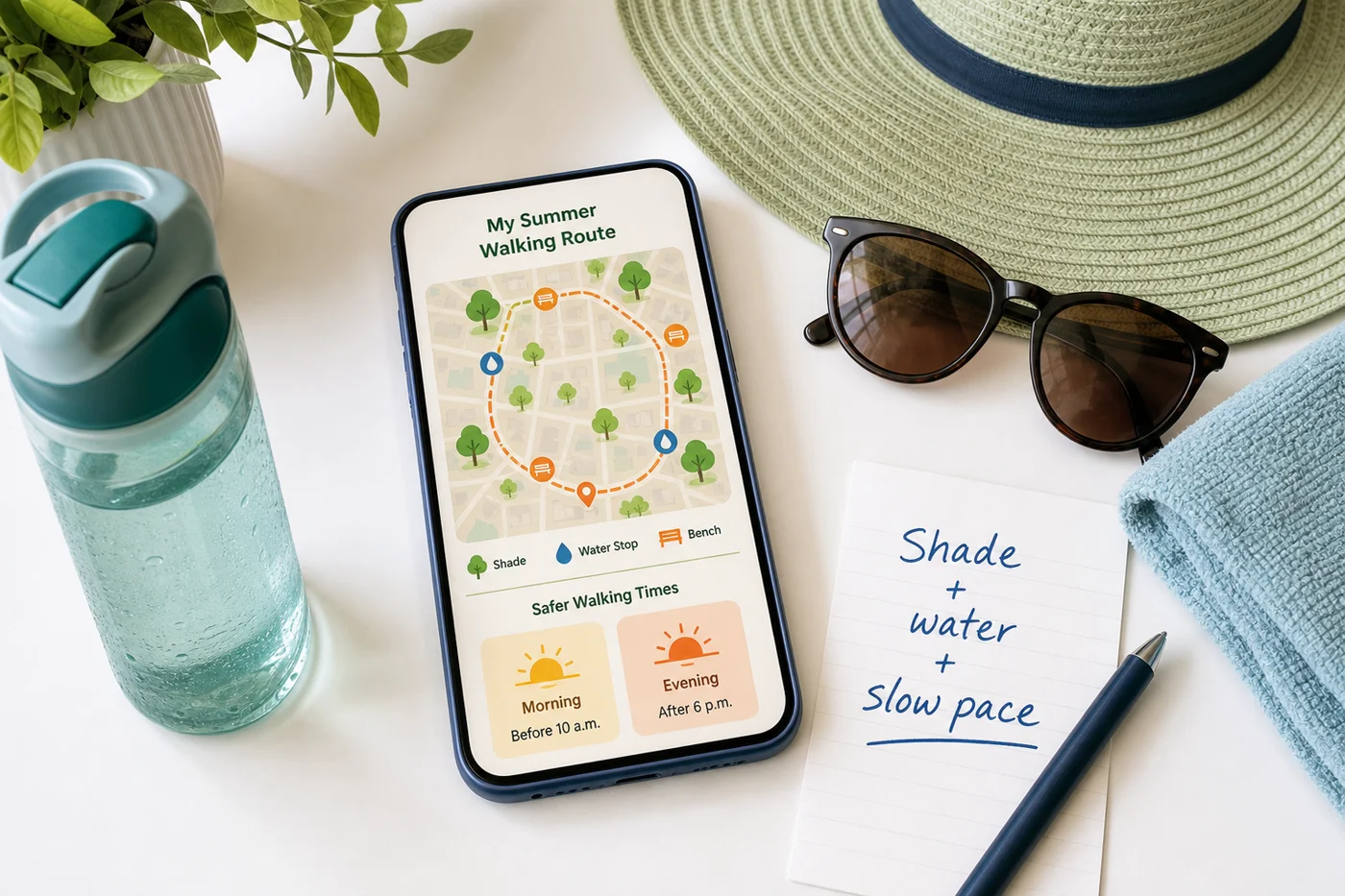
Hydration Is Not an Afterthought
Hydration is part of the walk, not something you remember afterward. When you sweat in hot weather, your body can lose more fluid than you take in, especially during exercise or long stretches outside. Diabetes can add another layer of risk for some people, so it helps to treat water like part of your walking plan. A good starting point is to drink enough water, be thoughtful with sugary or heavily caffeinated drinks, and take in extra fluids on hot days. Here is a plain-language guide to dehydration.
A helpful habit is to start the walk already hydrated. Drink water before leaving, bring water with you, and sip steadily instead of waiting until thirst feels urgent. Some people may need electrolytes after longer or sweatier walks, but many sports drinks contain a lot of sugar. Read labels and follow your care plan, especially if you manage blood sugar with insulin, certain medications, kidney conditions, or heart conditions.
Water helps with many basic body jobs, including temperature control. That matters in summer because you lose fluid through sweat, breathing, and bathroom trips, and thirst does not always show up early enough. This short article on water and healthy aging is a helpful extra read.
A Simple Summer Walking Formula
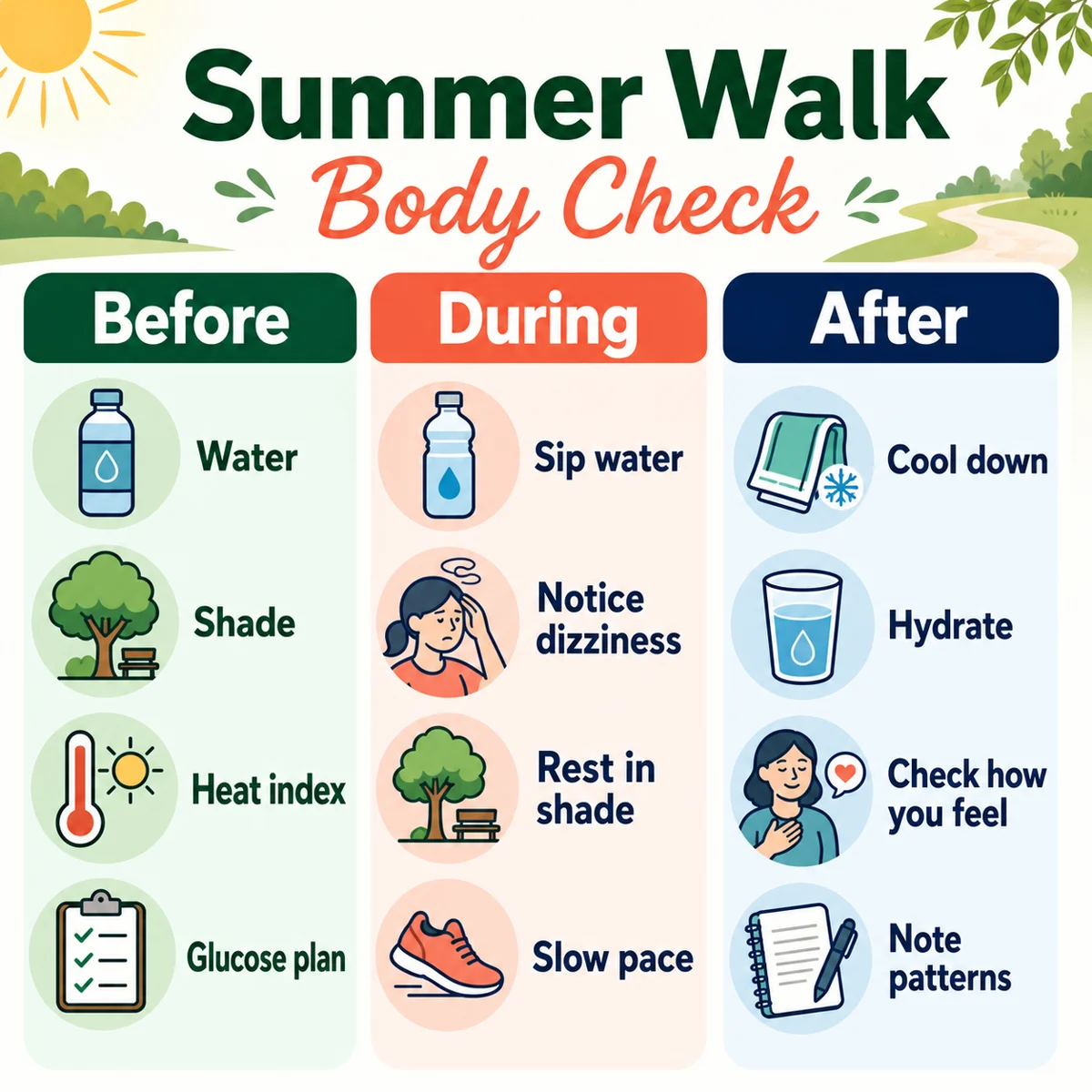
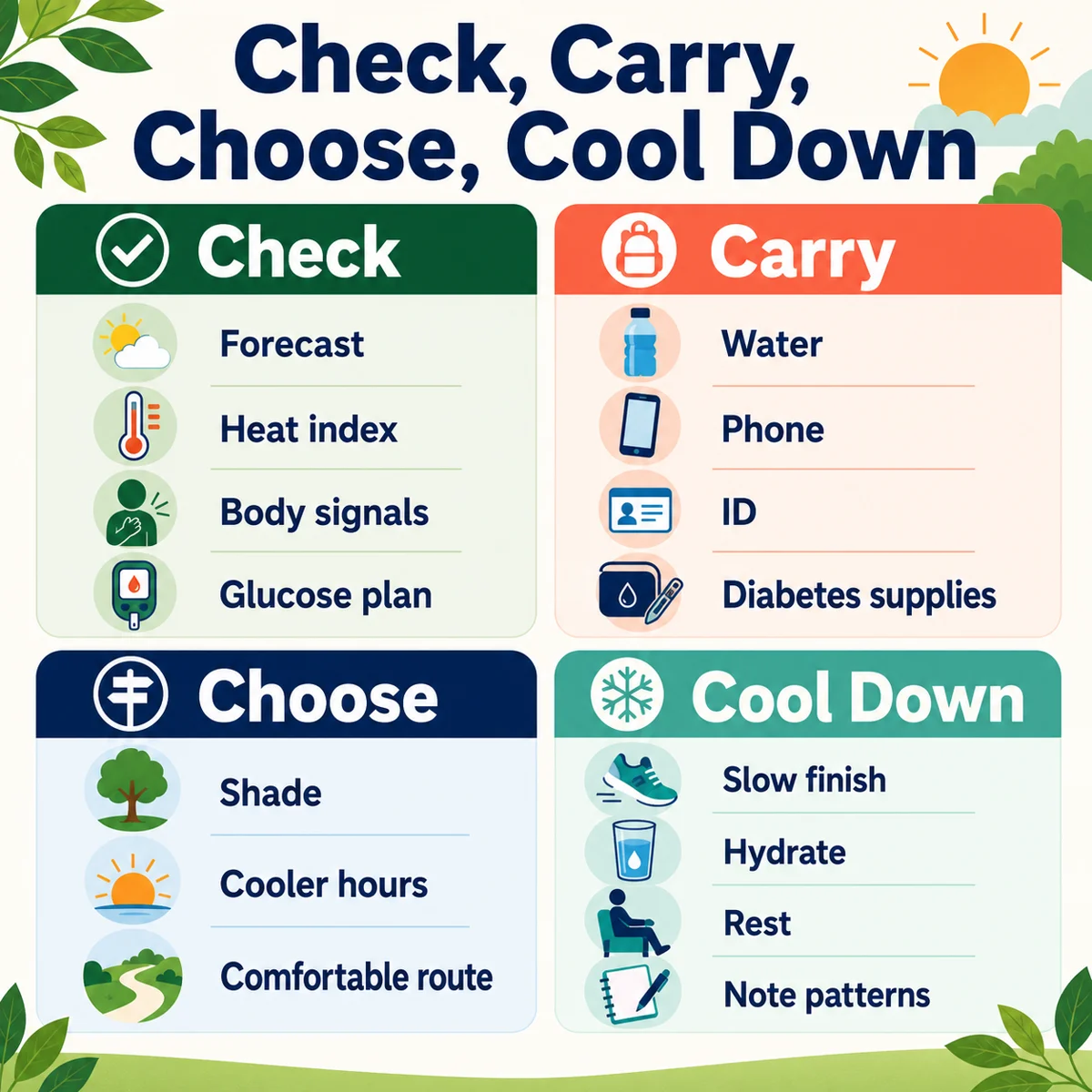
Here is an easy rhythm to remember: check, carry, choose, and cool down.
- Check: Check the forecast, heat index, how you feel, and your blood sugar plan. The National Weather Service explains the heat index as the combined effect of heat and humidity, which can make a day feel more stressful than the temperature alone suggests.
- Carry: Carry water, identification, your phone, and diabetes supplies if your care plan calls for them. If you are building a habit, a tool like Memovela can help you notice patterns over time.
- Choose: Choose shade, lighter clothing, sunscreen, supportive shoes, and a route with options to stop. Our daily wellness blueprint is built around choices like these: practical, repeatable, and kind to the body.
- Cool down: Slow the last few minutes, stretch gently, drink water, and notice how you feel afterward. If a walk feels unusually hard, shorten the next one and build from there.
This formula also connects with our broader movement library. If long walks feel out of reach, start with active minds and active bodies principles, or combine shorter walks with simple low-impact routines. Movement does not need to be dramatic to matter.
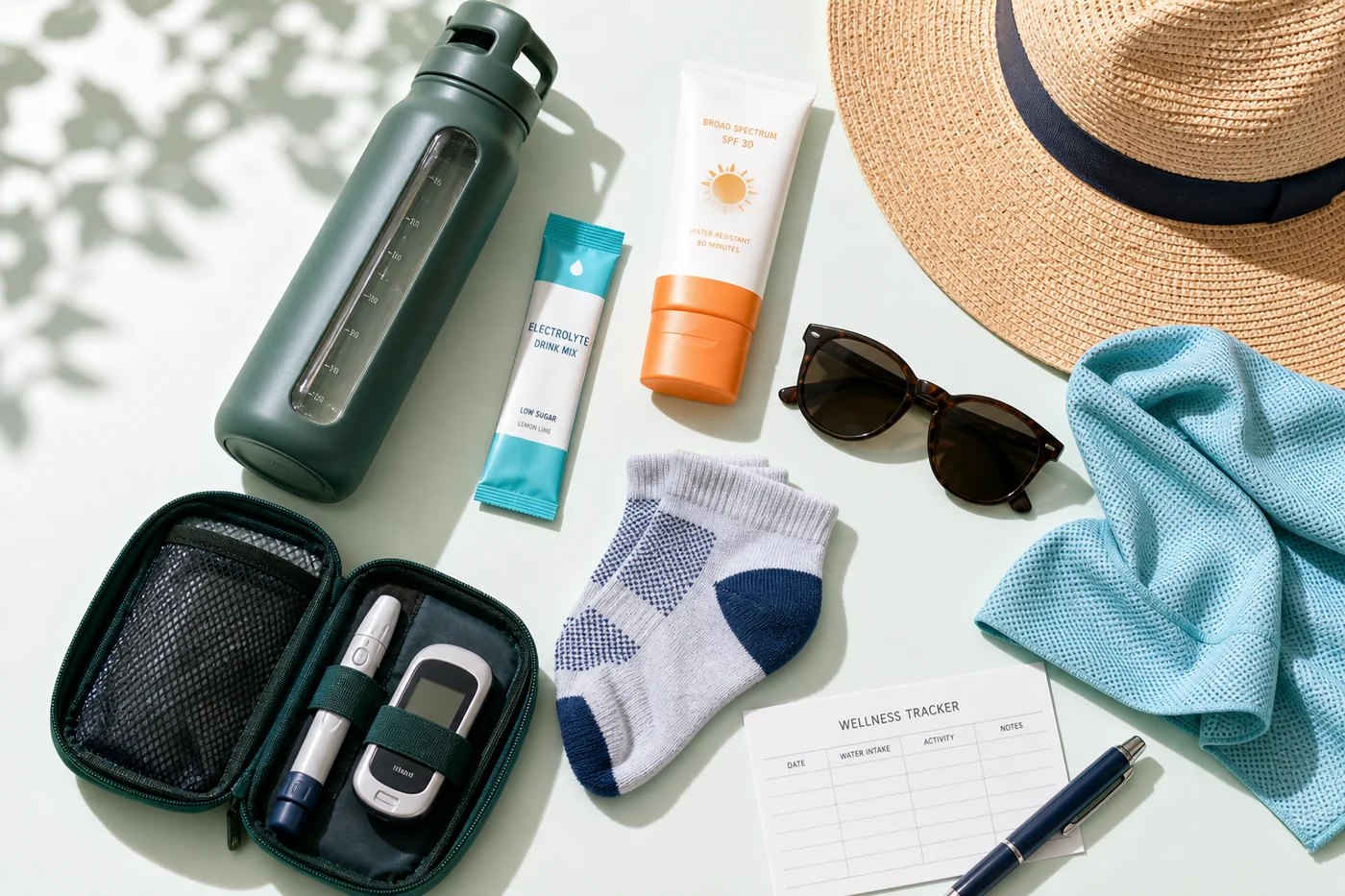
Listen to the Body, Not Just the Step Count
Summer walks are a chance to practice body awareness. A step count can be useful, but it is not the whole story. Pay attention to thirst, dizziness, headache, unusual fatigue, nausea, confusion, clammy skin, rapid heartbeat, or muscle cramps. These can be warning signs that your body needs shade, rest, water, or medical help. You can review common signs of heat illness here.
For people with diabetes, body signals can overlap with blood sugar signals. Feeling shaky, sweaty, weak, confused, or unusually tired may deserve a glucose check if that is part of your care plan. Our article on daily blood sugar control is a friendly place to revisit the basics, and our deeper discussion of insulin resistance and cognitive decline explains why metabolic signals are never just numbers on a screen.
If you feel warning signs of heat illness, stop activity, move to shade or air conditioning, hydrate if you can safely drink, and seek medical help when symptoms are severe or do not improve. This article is educational and cannot replace individualized medical advice.
Food, Fluids, and the Walk After a Meal
Summer movement also fits naturally with food timing. A short, comfortable walk after a meal may help some people notice their energy, fullness, digestion, and glucose patterns more clearly. You do not need to turn dinner into a workout. Even a gentle lap around the block or a few minutes indoors can become useful information about how your body responds. For more background, see these articles on walking and glycemic control and walking exercise in type 2 diabetes.
Within our own guide, this connects beautifully with food sequencing, mindful eating, and our healthy eating game. The point is not to create a perfect routine. It is to create a gentle feedback loop: what did I eat, how did I move, how did I hydrate, how did I feel?
Why This Also Belongs in a Brain Health Conversation
Mindful Diabetes often talks about the body-brain connection because blood sugar, circulation, sleep, stress, and nutrition can all affect how the brain functions over time. If you are new to that idea, start with What is Type 3 Diabetes? and our overview of the diabetes-Alzheimer's connection. A summer walk is one small place where those ideas become practical: move a little, hydrate well, notice how you feel, and build from there.
Exercise can support circulation, insulin sensitivity, mood, sleep quality, and daily structure. Hydration supports temperature regulation and basic body function. Stress awareness matters too, which is why our article on stress in diabetes pairs naturally with summer walking: a quiet walk can be movement, mental reset, and body check-in all at once.
This is also where technology can help without taking over. Our JEIR updates explore AI-supported wellness education, while Memovela focuses on simple habit tracking. Used thoughtfully, tools can help us notice patterns we might miss: hot days, low sleep, missed water, longer walks, higher stress, or better recovery.
A Gentle Plan for Your Next Summer Walk
- Choose a cooler time: morning or evening.
- Pick a route with shade and a clear turnaround point.
- Drink water before you leave and bring water with you.
- Check blood sugar according to your care plan.
- Walk at a pace where conversation is still possible.
- Pause if you feel overheated, dizzy, confused, weak, or unusually tired.
- Cool down, hydrate, and notice how your body responds.
If you are just starting, ten minutes counts. If you are already active, the summer challenge is not always doing more. Sometimes the wiser goal is doing enough, at the right time, with the right support.

Key Takeaways
- Walking can be a powerful, accessible habit for people managing diabetes or insulin resistance.
- Summer heat changes the plan: avoid peak heat, choose shade, hydrate, and monitor body signals.
- Dehydration can affect how you feel and may interact with blood sugar management.
- Hydration, movement, mindful eating, sleep, and stress management work together.
- Small, repeatable choices are the heart of prevention.
At Mindful Diabetes Inc., we believe prevention becomes more realistic when it feels human. A summer walk is not just exercise. It can be a conversation with your body: Am I hydrated? Am I too hot? Am I steady? Do I need shade? Do I need to slow down? Do I feel more connected after moving?
That kind of awareness is where wellness starts.
Keep Exploring
Continue with mental health and cognitive wellness, revisit small daily wellness habits, or support future prevention education through our donation page. Every article, tool, and community resource helps us make prevention clearer and more practical.