
What you’ll learn
Deep inside a forest, a strange white mushroom grows in cascading, almost feathery spines. Beneath the soil, a tropical plant produces vivid orange roots. And on one of the world's most recognizable ancient tree lineages, fan-shaped leaves manufacture an intricate mixture of chemical compounds.
What could lion's mane, turmeric, and ginkgo possibly have to do with the human brain?
At the molecular level, quite a lot. Researchers have isolated compounds from these organisms, tested them in cells, studied their effects in animals, and brought selected preparations into human experiments. Some findings are genuinely intriguing. Others have not survived the jump from a promising hypothesis to a large clinical trial.
That tension is the story worth telling. Nature can be an extraordinary starting point for scientific discovery without every natural substance becoming a proven medicine.
This article does not ask you to believe in a miracle mushroom, a magical spice, or a memory-saving tree. Instead, we are going to investigate how biological discovery works: why a molecule can look impressive under a microscope but do little in a person; why formulations matter; and why an unexpected negative study is sometimes the result that moves science forward.
And because we're Mindful Diabetes, we'll also explore the connection between metabolic health, the brain's energy systems, and dementia—with the care that a complicated scientific question deserves.
The short version: what does the evidence actually say?
Lion's mane: Its metabolites are interesting to researchers studying neurotrophic signaling and neuronal biology. Human cognition studies are small, use different preparations, and have delivered mixed or inconclusive results. There is no convincing evidence that taking lion's mane prevents Alzheimer's disease or reverses diabetes-related nerve damage. [5] [6] [7] [8]
Turmeric and curcumin: Curcumin interacts with biological pathways in experimental settings, but what happens after swallowing it depends on absorption, metabolism, and formulation. Reviews of human cognitive trials disagree on the overall size and consistency of possible benefits. These data do not establish dementia prevention. Concentrated supplements also carry safety considerations. [9] [10] [11]
Ginkgo biloba: A major randomized prevention trial involving 3,069 older adults did not demonstrate a reduction in dementia or Alzheimer's dementia incidence. That doesn't mean every possible biological effect has been ruled out, but it means ginkgo should not be presented as a proven way to prevent dementia. [12] [13]
The diabetes connection: Type 2 diabetes is associated with increased dementia risk, but diabetes, brain insulin signaling abnormalities, reduced brain glucose utilization, vascular injury, and Alzheimer's neuropathology describe different things. They are not interchangeable diagnoses or a compulsory chain of progression. [1] [2] [3]
A useful question for the whole article: What was measured, in whom, with what preparation, and compared with what? That question can change the meaning of almost any health headline.
1. Nature is a chemistry laboratory
Why would a mushroom or a tree make molecules that interest neurologists in the first place?
An organism's chemistry is part of how it survives. Fungi, plants, and other living things make enormous varieties of metabolites: compounds involved in growth, defense, communication, stress responses, and interactions with microbes or other organisms. Some happen to interact with biological machinery in humans. Others do not—or they do so only at concentrations that are difficult or unsafe to achieve.
Think about the difference between a substance's origin and its function. A molecule made by a fungus is not automatically beneficial because it came from a fungus. Likewise, being synthetic does not automatically make a molecule dangerous. Structure, dose, exposure, biological target, and clinical context matter far more than the familiar labels "natural" or "artificial."
Our three case studies offer different chemical worlds. Lion's mane is a fungus, not a plant; researchers are interested in groups of compounds including hericenones and erinacines. Turmeric is the underground stem, or rhizome, of Curcuma longa, containing curcuminoids such as curcumin. Ginkgo leaves contain complex mixtures that include flavonoids and terpene lactones. None of these names, on their own, tells you whether swallowing an extract will improve memory.
A scientific investigation must answer several separate questions. Is the active chemical actually present in the tested material? Does it reach the relevant part of the body? Does it engage a meaningful biological pathway? Does that pathway change an outcome that matters to people? And can the effect be reproduced without unacceptable harm?
We'll start with a deceptively simple word: brain.
2. Diabetes and the brain: a relationship, not a single disease
Our brains are metabolically demanding organs. Even when we're sitting quietly, networks of neurons and supporting cells need a continuous supply of energy to maintain electrical signals, restore ion gradients, communicate across synapses, and perform the everyday work of thinking and remembering.
Glucose is an important fuel in this system. But there's a crucial distinction between glucose entering and being used by brain cells and insulin signaling within the brain.
Three overlapping processes that we must not confuse
First, glucose crosses the blood–brain barrier largely through transport machinery such as GLUT1, while neurons commonly express GLUT3. Much of this glucose transport is not dependent on insulin in the way glucose uptake in muscle and fat can be. Second, insulin receptors nevertheless exist in the brain, where signaling participates in neural and metabolic regulation. Third, blood vessels and inflammatory processes influence the environments in which neurons function. These systems communicate, but they are not equivalent. [3] [4]
Researchers use the phrase brain insulin signaling dysregulation to describe alterations in the pathways through which insulin and related signals operate within brain tissue. That is a mechanistic description, not an established stand-alone diagnosis of Alzheimer's disease. Similarly, cerebral glucose hypometabolism means reduced glucose utilization in particular brain regions; it can be investigated using techniques such as fluorodeoxyglucose PET (FDG-PET), but its presence is not synonymous with abnormal insulin signaling. [3] [4]
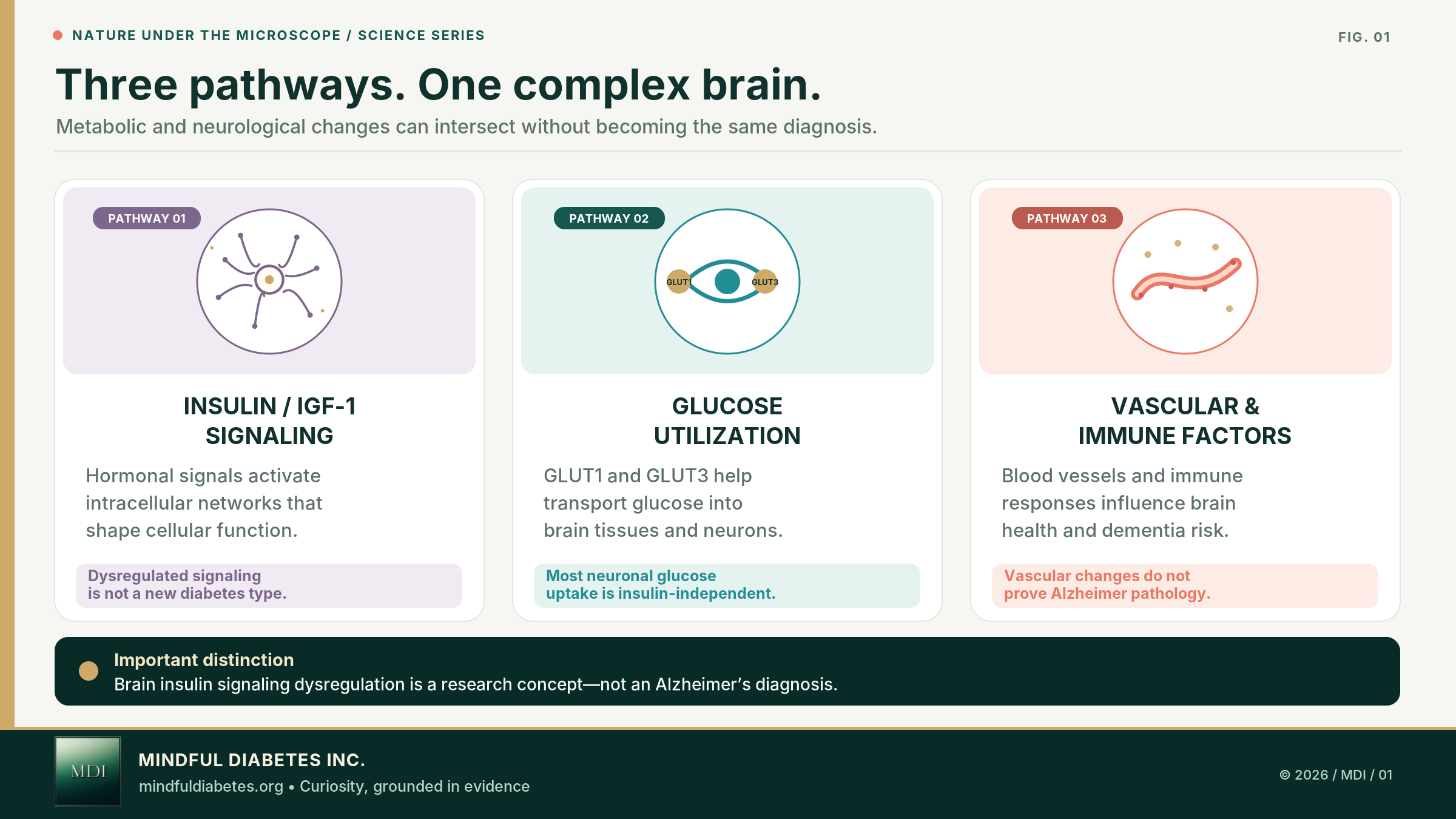
Picture a busy city. The delivery of electricity, the messages sent to its control centers, and the condition of its roads all affect how the city operates. But a power problem isn't necessarily a problem with the road network, and a damaged road doesn't prove that a particular building has failed. The brain likewise has multiple systems that can influence one another without becoming the same process.
Dementia is a syndrome; Alzheimer's has specific pathology
Dementia describes a decline in cognitive function severe enough to interfere with everyday independence. It can arise from different diseases or combinations of conditions. Alzheimer's disease is associated with distinctive biological changes, including amyloid-beta and tau pathology. Vascular brain injury—from strokes or disease affecting large and small vessels—can also impair cognition, on its own or alongside Alzheimer's-related changes.
This distinction matters especially for people with diabetes. A 2026 review in Diabetologia describes dementia in type 2 diabetes as a multifactorial process, shaped by vascular injury, neurodegeneration, resilience, and other influences rather than one inevitable pathway. Earlier autopsy-based research, including a systematic review covering 6,330 individuals across 11 studies, found a more consistent association between diabetes and vascular lesions than between diabetes and greater classical Alzheimer's neuropathology. Studies are not perfectly uniform, and none allows us to dismiss interactions among these processes. [1] [2]
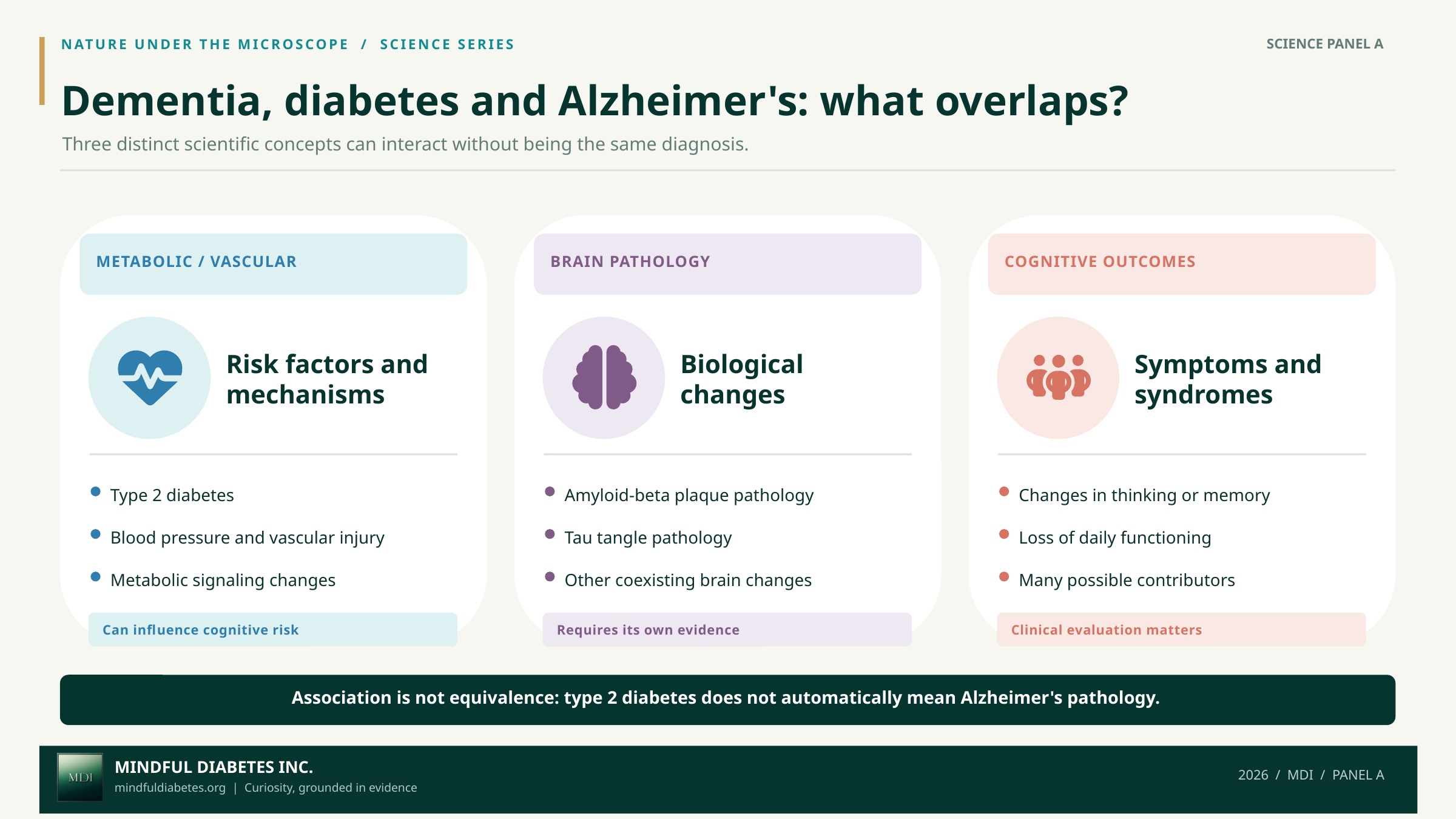
This leads to a much more useful question than "does diabetes turn into Alzheimer's?": Which processes are contributing to an individual's cognitive health, and what can actually be done about them?
It also prevents a common mistake in supplement marketing. If a compound appears to influence an inflammation marker or an insulin-signaling protein in a cell, that finding does not show that the compound prevents dementia, removes amyloid plaques, or treats Alzheimer's disease. Each of those outcomes requires different evidence.
For more on this broader biology, our article Is Metabolic Syndrome Changing Your Brain Before You Notice? examines recent human brain-network research without turning an association into a diagnosis.
3. Lion's mane: an extraordinary mushroom, an unfinished experiment
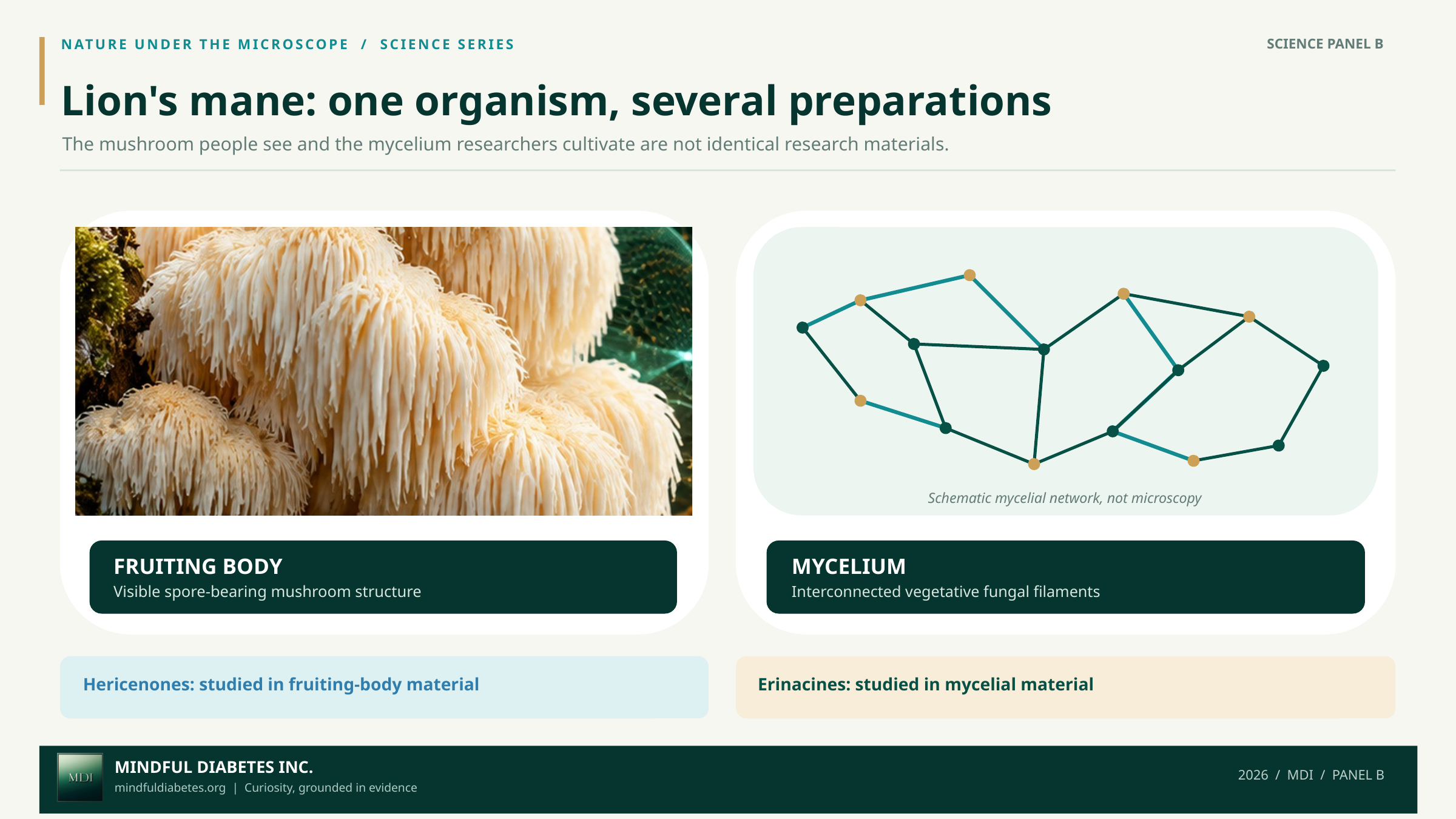
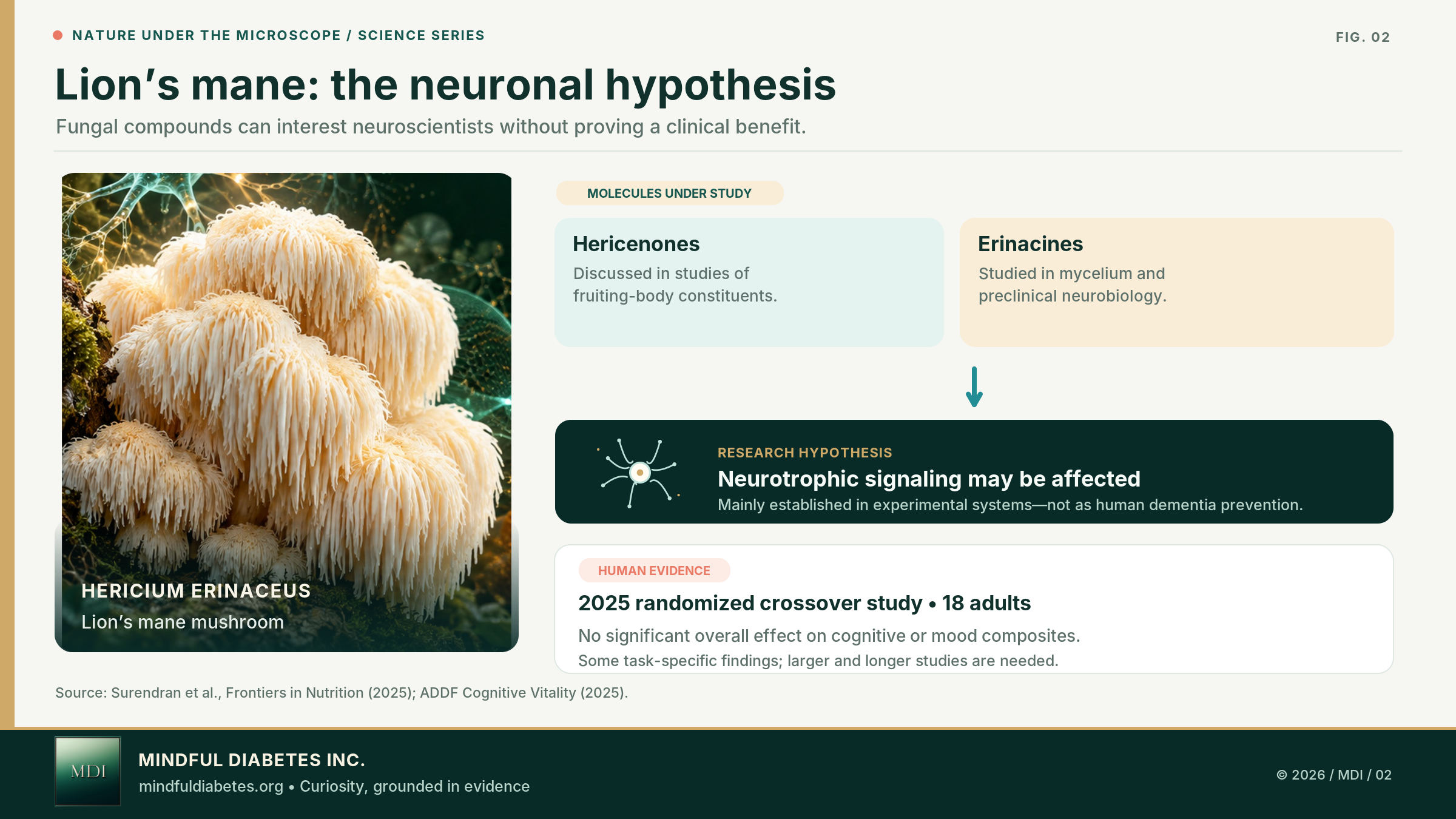
Lion's mane (Hericium erinaceus) almost looks designed for a scientific illustration. Its fruiting body—the visible mushroom—is covered in long white spines. Like other fungi, it also grows a less photogenic network of threadlike structures called mycelium. Those are different biological materials, and that detail matters when someone claims that "lion's mane" was tested in a study.
What exactly is inside the mushroom?
Two metabolite families often appear in lion's mane research: hericenones, associated with studies of fruiting-body material, and erinacines, especially discussed in research involving mycelial preparations. Researchers also examine polysaccharides and other constituents. The actual chemical profile varies with organism material, cultivation, extraction, and analysis. Not every powder, beverage, or capsule contains the same substances in the same amounts. [5]
These compounds have drawn attention because nervous-system cells rely on signals that influence survival, growth, and adaptability. Nerve growth factor (NGF) and brain-derived neurotrophic factor (BDNF) are two examples of proteins involved in neuronal biology. Scientists have investigated whether certain lion's mane-derived substances can affect related pathways in laboratory or animal models. The appeal of the hypothesis is easy to understand: if a compound affects a process involved in maintaining neurons, perhaps it could eventually become useful in neurological research. [5]
But notice the word perhaps. A change in a cultured cell is not automatically a change in a living human brain. Compounds may be metabolized before reaching circulation; some may never cross into brain tissue at a meaningful concentration. A preparation containing the mushroom is not equivalent to a purified compound applied directly to cells. And an increase in one signaling marker does not tell us whether someone will remember more, feel better, or avoid a disease years later.
What happened when researchers tested people?
The human story is interesting precisely because it isn't one tidy answer.
A 2024 randomized pilot study involving 33 participants tested an erinacine-A-enriched Hericium preparation for eight weeks. Some cognitive measures appeared favorable in analyses that accounted for additional factors. The study also investigated biological measures and the gut microbiome. That's a legitimate reason for more research, but it remains a small pilot using specific outcomes and a particular preparation—not evidence of dementia prevention. [6]
Then a 2025 double-blind crossover trial involving 18 healthy younger adults tested an acute dose of fruiting-body extract against placebo. The researchers did not find a significant overall effect on their composite cognitive or mood measures. A short, single-dose experiment in young adults cannot settle questions about longer-term effects in older populations, but it does caution against an overly confident claim that lion's mane boosts everyone's cognition. [7]
In September 2026, a separate proof-of-concept study reported on 10 healthy adults taking a mixed fruiting-body and mycelial preparation for four weeks. Changes in executive-function measures and circulating BDNF did not reach statistical significance. The study lacked the kind of placebo-controlled design and size needed to support efficacy conclusions. It's a useful piece of early research, not clinical confirmation. [8]
Look carefully at what differs across those three experiments: the age and health of participants, the part of the fungus used, the preparation, the duration, the cognitive tests, and the comparison group. Even if all three bottles said "lion's mane," they would not be one interchangeable treatment.
A more fascinating question than "Does it work?"
Researchers now have a sharper set of questions. Which compounds survive digestion? Which metabolites reach circulation? What dose actually reaches brain tissue? Could a reproducible preparation change a validated clinical outcome? Would any change last, and would it outweigh adverse effects?
Those are questions worth investigating. At present, they are not reasons to claim that lion's mane prevents Alzheimer's disease, restores neurons in humans, or reverses diabetic neuropathy.
4. The supplement-label problem: why the product is part of the experiment
Imagine two research teams investigating the same organism. One uses a hot-water extract from a verified fruiting body. The other uses an alcohol extract from cultivated mycelium. A commercial seller later mixes a different batch into capsules and advertises the result using the same common name. Could we assume all three products produce the same chemical exposure?
Not remotely.
The starting material is only the first variable. Scientists also need to know which part of the organism was used, how it was grown, how compounds were extracted, whether specific constituents were quantified, and how a product was stored and formulated. Even products made from the same species can differ substantially. Without those details, reproducing a study—or translating a study into an over-the-counter product—is difficult.
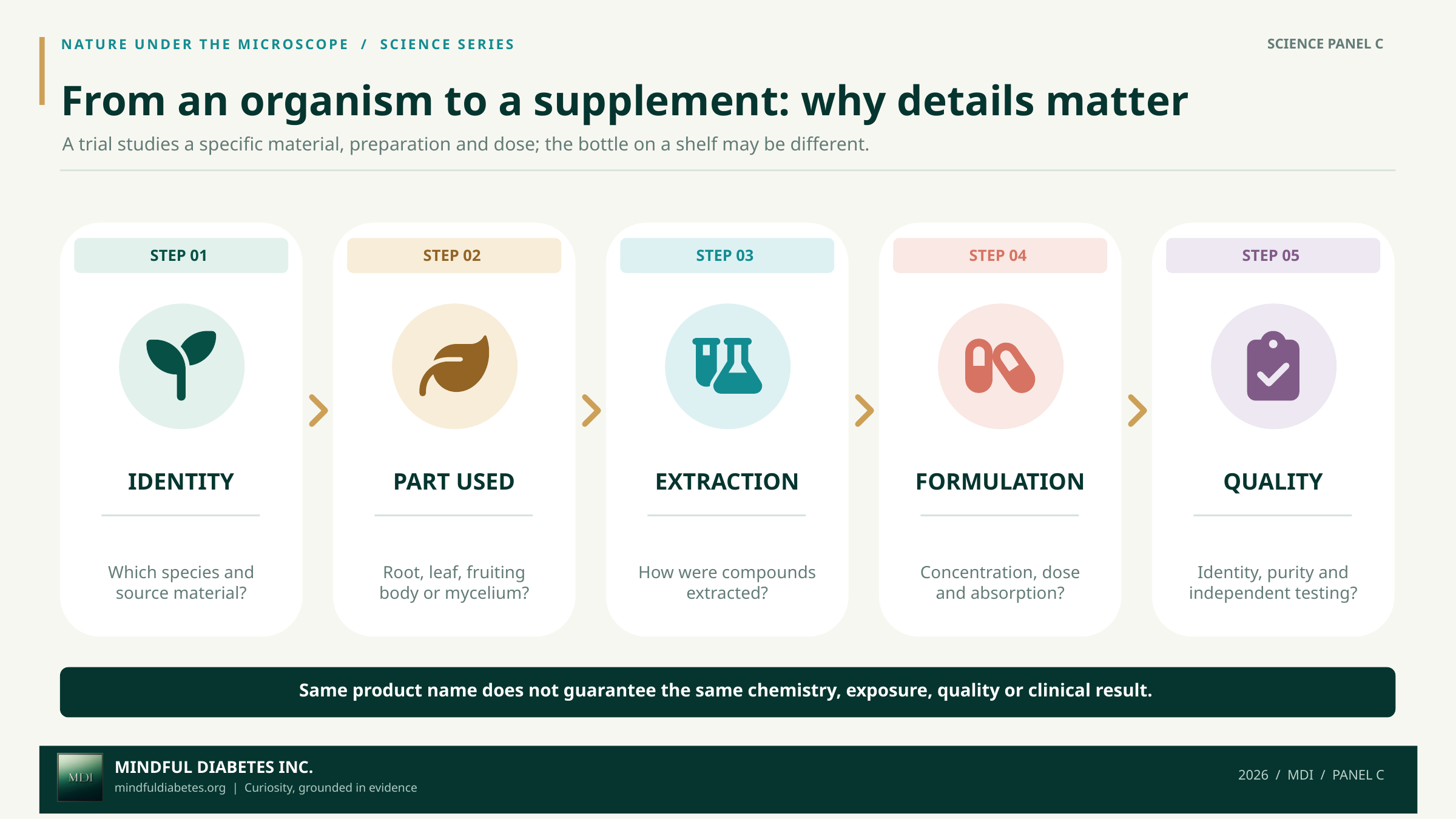
A label saying "10:1 extract" may sound scientific, but a concentration ratio alone does not prove that a product contains a particular active dose or has demonstrated clinical effects. Nor does a third-party quality test establish efficacy: quality assessment can help address identity and composition, but a trustworthy composition is not the same thing as a treatment that works.
This bridge between chemistry and human exposure sets up our second mystery, because turmeric offers one of the clearest examples of a molecule that can look compelling in a test tube while presenting difficult pharmacological questions in the body.
5. Turmeric: a brilliant molecule meets the realities of pharmacology
Cut open a turmeric rhizome and you reveal the luminous orange-yellow pigment that has made this plant familiar in kitchens around the world. Among its constituents is curcumin, a polyphenolic compound that researchers have investigated for effects on biological pathways involved in oxidative stress, inflammatory signaling, and other cellular responses.
In a laboratory, a researcher might add a defined concentration of curcumin to cultured cells and measure a shift in gene expression or a signaling protein. That experiment can be informative. But the human digestive system does not deliver a chemical to brain tissue in the same way a scientist dispenses it into a culture dish.
The journey matters as much as the molecule
After oral consumption, curcumin encounters digestion, limited absorption of unmodified compound, extensive metabolism, and transport through circulation. Researchers have developed different formulations—sometimes involving lipids or ingredients intended to alter absorption—to change exposure. The same nominal milligram dose may behave differently between products. [9]
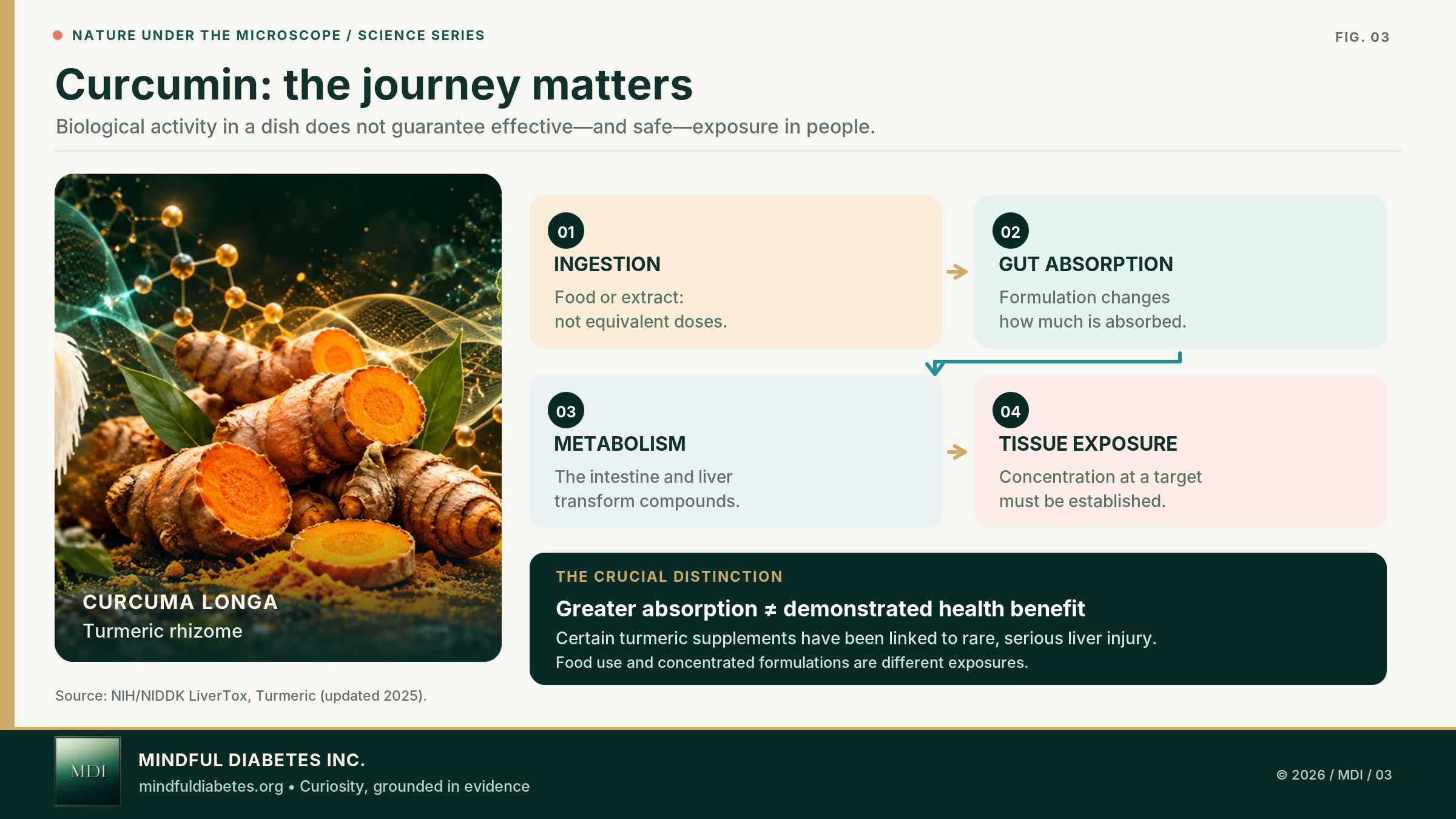
Here is the key distinction: bioavailability is not efficacy. Increasing the amount of compound that reaches circulation does not automatically demonstrate that it reaches the right tissue, engages the intended mechanism, improves memory, or prevents disease. It may also change the risk profile. This is why pharmacokinetics—the study of how the body absorbs, distributes, transforms, and eliminates compounds—is such a vital part of drug development.
There's also a beautiful piece of fundamental chemistry here. Reactive molecules can interact with multiple targets in simplified assays; some findings may depend heavily on experimental conditions or assay interference. Scientists must therefore confirm a proposed mechanism using independent methods and realistic exposures. A single striking laboratory result is the opening of an investigation, not its ending.
Two 2025 meta-analyses, two different overall findings
A particularly revealing example arrived in 2025. One updated meta-analysis combined nine randomized trials and 501 participants and reported a statistically significant improvement in pooled global cognitive measures. The authors also explored subgroups and dosing patterns. Those exploratory results are hypotheses for future trials—not instructions for readers to choose an "optimal" supplement dose. [10]
A different 2025 systematic review and meta-analysis, evaluating ten human studies and 531 participants, found no statistically significant overall effect on global cognition, although some narrower outcomes, including working memory and processing speed, favored curcumin in subgroup analyses. That review also reported a higher incidence of adverse events among supplemented participants. [11]
How can scientific reviews disagree? They may include different trials, use different outcome definitions, handle subgroup data differently, or apply different statistical methods. They may also be influenced by small studies and variations in the formulations being compared. Disagreement does not necessarily mean anyone acted in bad faith. It may signal that the underlying evidence is not yet robust enough to deliver a stable answer.
And importantly, a change on a cognitive test is not evidence that dementia was prevented. A prevention claim would require appropriately designed long-term clinical research with relevant endpoints.
The safety twist: food and concentrated extracts are different exposures
Using turmeric as a culinary spice is not comparable to taking a concentrated supplement every day. NIH's LiverTox resource documents rare but potentially serious liver injury associated with some turmeric and curcumin products, including reports involving formulations designed to increase absorption. The individual risk is not precisely known, and the majority of people using turmeric do not experience this outcome; nevertheless, it is a real safety signal. [9]
That is the paradox of formulation science: the same strategy that increases exposure to a biologically active molecule can also change the possibility of harm.
The scientifically responsible conclusion is neither "curcumin is useless" nor "turmeric protects the brain." Curcumin remains an active research subject; its clinical cognitive benefits are uncertain, and concentrated preparations require a more careful safety conversation than ordinary use in food.
6. Ginkgo biloba: when a beautiful hypothesis meets a large trial
Few leaves are as visually recognizable as those of the ginkgo tree. Its fan-like shape and remarkable evolutionary history make it an irresistible subject for a science article. Extracts from ginkgo leaves contain multiple constituents, including flavonoids and terpene lactones, that have been investigated for effects on physiological pathways.
Some laboratory hypotheses focused on oxidative stress, cellular protection, or vascular function. The reasoning sounded plausible: perhaps a standardized leaf extract could help preserve cognitive health in aging people. But plausible does not mean proven. The essential question is what happened when researchers tested that idea over years in real people.
The GEM trial: more than 3,000 people, a clear question
The Ginkgo Evaluation of Memory (GEM) trial randomly assigned 3,069 older adults to a standardized ginkgo extract or placebo. The active group received 120 mg twice daily of the trial preparation. Participants were followed for a median of 6.1 years. The primary question was whether ginkgo reduced the incidence of dementia. [12]
For all-cause dementia, the study reported a hazard ratio of 1.12, with a 95% confidence interval of 0.94 to 1.33. For Alzheimer dementia, the corresponding estimate was 1.16, with a 95% confidence interval of 0.97 to 1.39. Neither result established a protective effect. The data did not support using the studied ginkgo preparation to prevent dementia. [12]
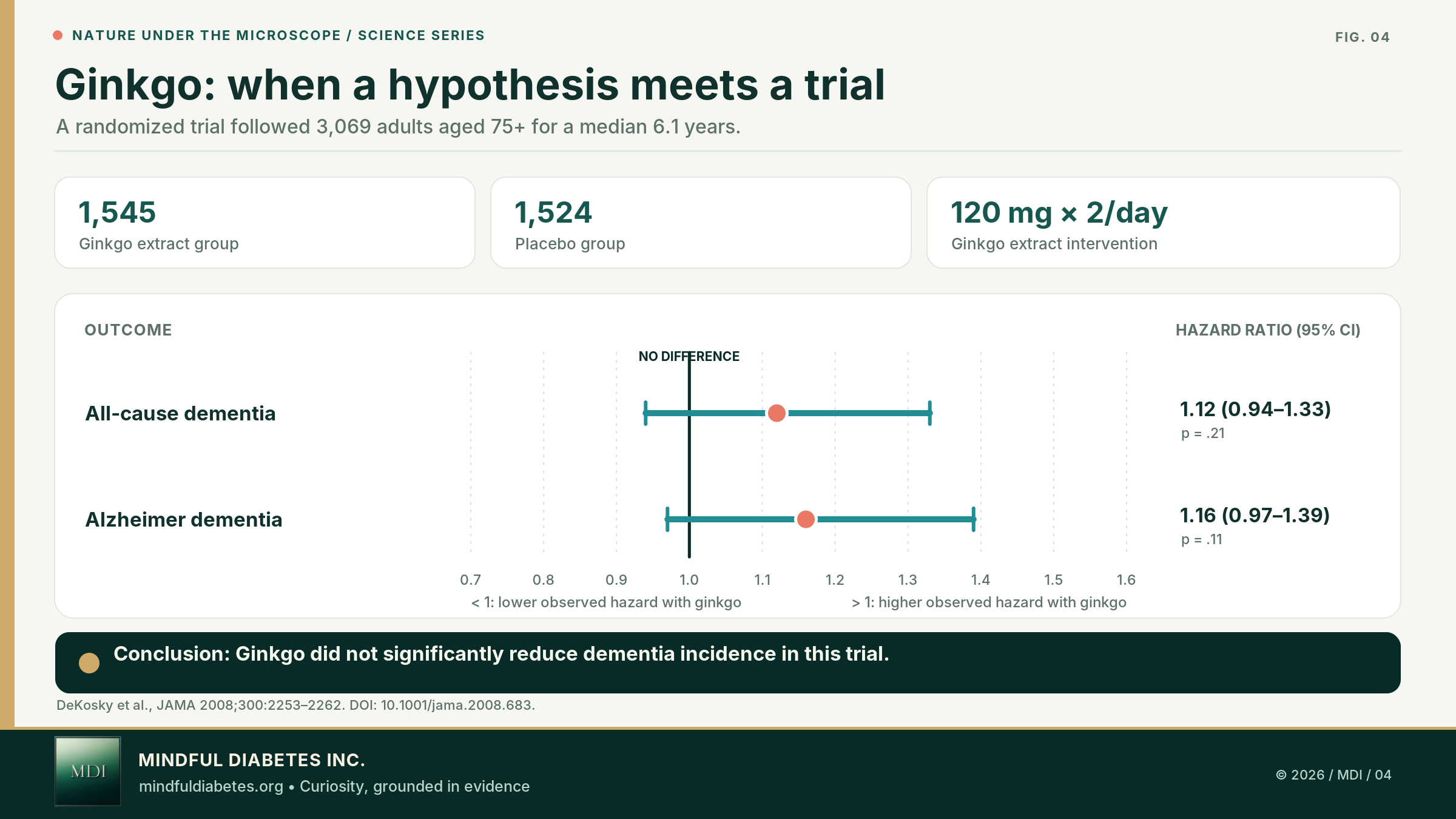
What does the plot mean? A hazard ratio of 1.0 represents no difference in the outcome rate between groups. Confidence intervals show a range of values compatible with the data under the statistical model. These two intervals include 1.0, so the trial did not show a statistically significant reduction in dementia incidence. The point estimates are not evidence of a proven harmful effect either; the interval and the full trial context matter.
The same research program later examined whether ginkgo slowed changes in cognitive test performance, and again did not demonstrate a meaningful protective effect on the measured trajectories. [14]
Why a negative trial is a scientific achievement
A small laboratory experiment can produce an elegant mechanism. A large trial can ask whether the mechanism produces a benefit people actually experience. If the hoped-for benefit isn't observed, the trial has still answered an important question, sometimes at enormous cost and with years of patient participation.
It is worth distinguishing prevention from symptom management. Reviews of ginkgo in people who already have dementia have explored possible effects on symptoms, with inconsistent findings that do not overturn the prevention result. The NIH National Center for Complementary and Integrative Health concludes that ginkgo has not been shown to prevent or slow dementia progression. [13]
There is a valuable lesson here: a natural substance does not have to succeed as a medicine to make its research worthwhile. Sometimes the most honest sentence—"the large trial did not show the anticipated benefit"—is also the most useful one.
7. Nature has inspired real diabetes medicines—but that's a different story
Now for one of the most extraordinary chapters in this article: the natural world really has helped inspire modern, clinically validated pharmaceuticals. The difference is the long process between discovering something interesting and establishing that a therapy works.
From a European herb to metformin
The history of metformin reaches back, in part, to Galega officinalis, or goat's rue, a plant associated with historical remedies for symptoms that we would now recognize as related to diabetes. Chemists studied guanidine-related compounds, some of which affected glucose in animals. Researchers then developed and assessed synthetic compounds within the biguanide family. Over many decades, medicinal chemistry, clinical investigation, and safety assessment shaped the development and use of metformin. [15]
Metformin is not a molecule simply harvested from goat's rue and placed in a tablet. It is a manufactured medicine with a much more complex scientific history. And the plant itself is not an interchangeable substitute for prescribed medication.
From a desert lizard to exenatide
A second story begins with the Gila monster, a venomous lizard native to the southwestern United States and northwestern Mexico. Research on a peptide called exendin-4 helped reveal a potential therapeutic path through the glucagon-like peptide-1 (GLP-1) receptor. Scientists developed exenatide, a synthetic medicine based on this peptide, and it became an early GLP-1 receptor agonist for type 2 diabetes. [16]
The important message is not that Gila monster venom itself should be used as a treatment. It's that discovery can start in a surprising organism, continue through molecular investigation and chemical development, and end—after rigorous testing—in a carefully manufactured pharmaceutical.
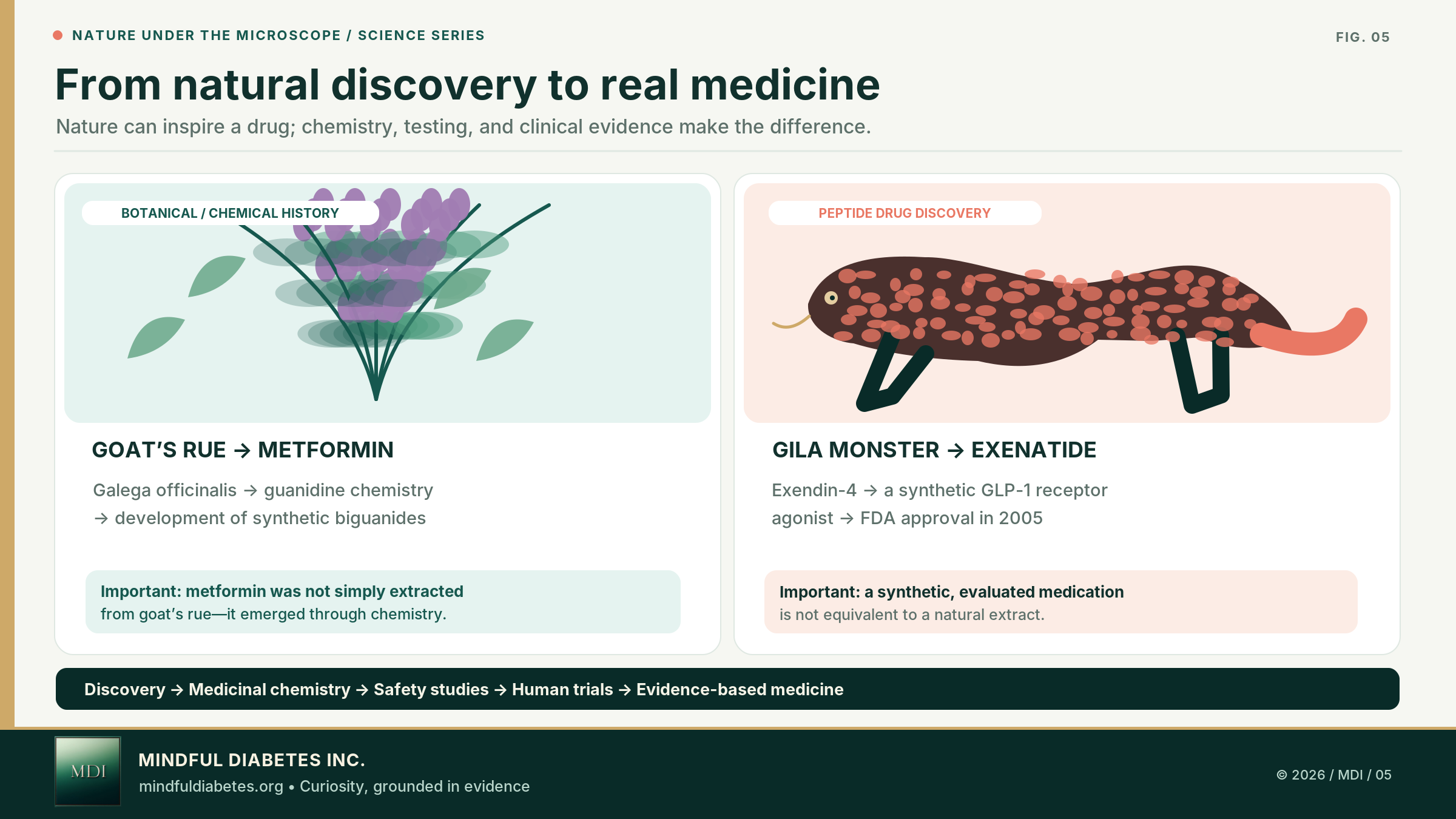
These histories are more compelling than the slogan "nature knows best." Nature provides astonishing chemical possibilities. Science determines which possibilities can be translated into a safe, effective therapy for a specific clinical purpose.
8. How do scientists know whether a supplement works?
Imagine three headlines:
- A mushroom compound changes a growth-related signal in cultured neurons.
- A small study finds a difference in one memory test after several weeks.
- A large randomized trial finds no reduction in dementia incidence after years of follow-up.
All three could be accurately describing real research. But they answer very different questions. The mistake occurs when a headline about the first result is treated as if it proved the third.
Before asking whether memory improved, ask what "memory" meant
A participant might complete a computer task testing response inhibition, a word-recall assessment, a questionnaire about how they feel, or a physician-evaluated clinical assessment. These tools measure different aspects of cognition or experience, and none automatically stands in for the diagnosis or prevention of Alzheimer's disease.
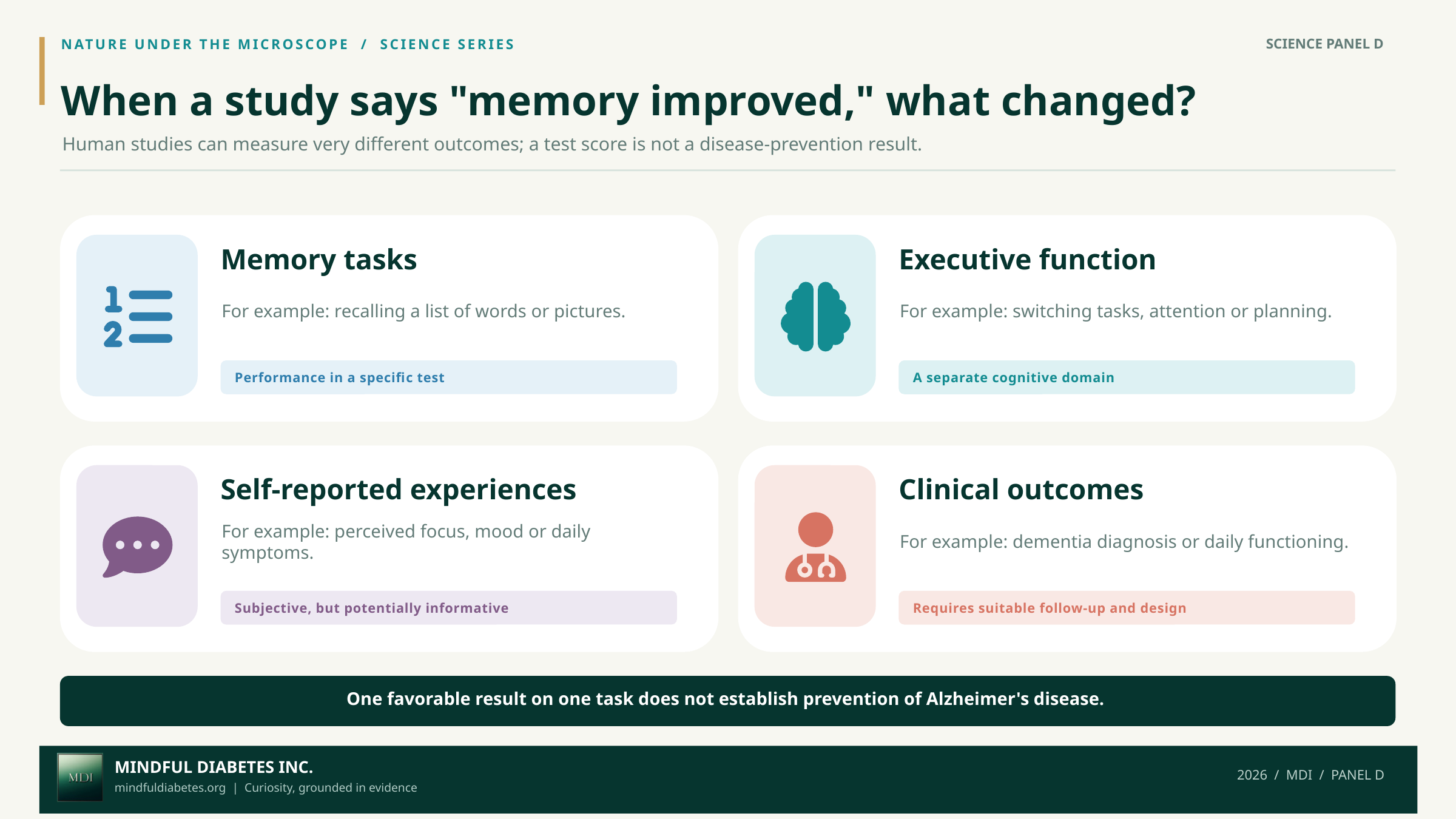
Small trials sometimes test many outcomes. If researchers compare enough measures, some can appear statistically favorable by chance. Good study design, prespecified outcomes, appropriate analysis, and replication help separate a real effect from noise. A difference in average scores also needs clinical interpretation: How large was the difference? Was it noticeable in everyday life? Did it last?
Equally important is the population. Findings in healthy 22-year-olds cannot be generalized directly to adults in their 80s with cognitive impairment. And a study of a purified extract does not automatically predict the effect of a commercially available mixed powder.
A useful evidence map, not a simplistic ladder
Laboratory and animal studies can reveal mechanisms and help decide which hypotheses deserve human testing. Small human trials can examine feasibility, tolerability, dosing, and preliminary signals. Larger controlled trials can provide stronger estimates of clinical outcomes. Reviews can synthesize a research field, but their conclusions still depend on the quality and comparability of the underlying studies.
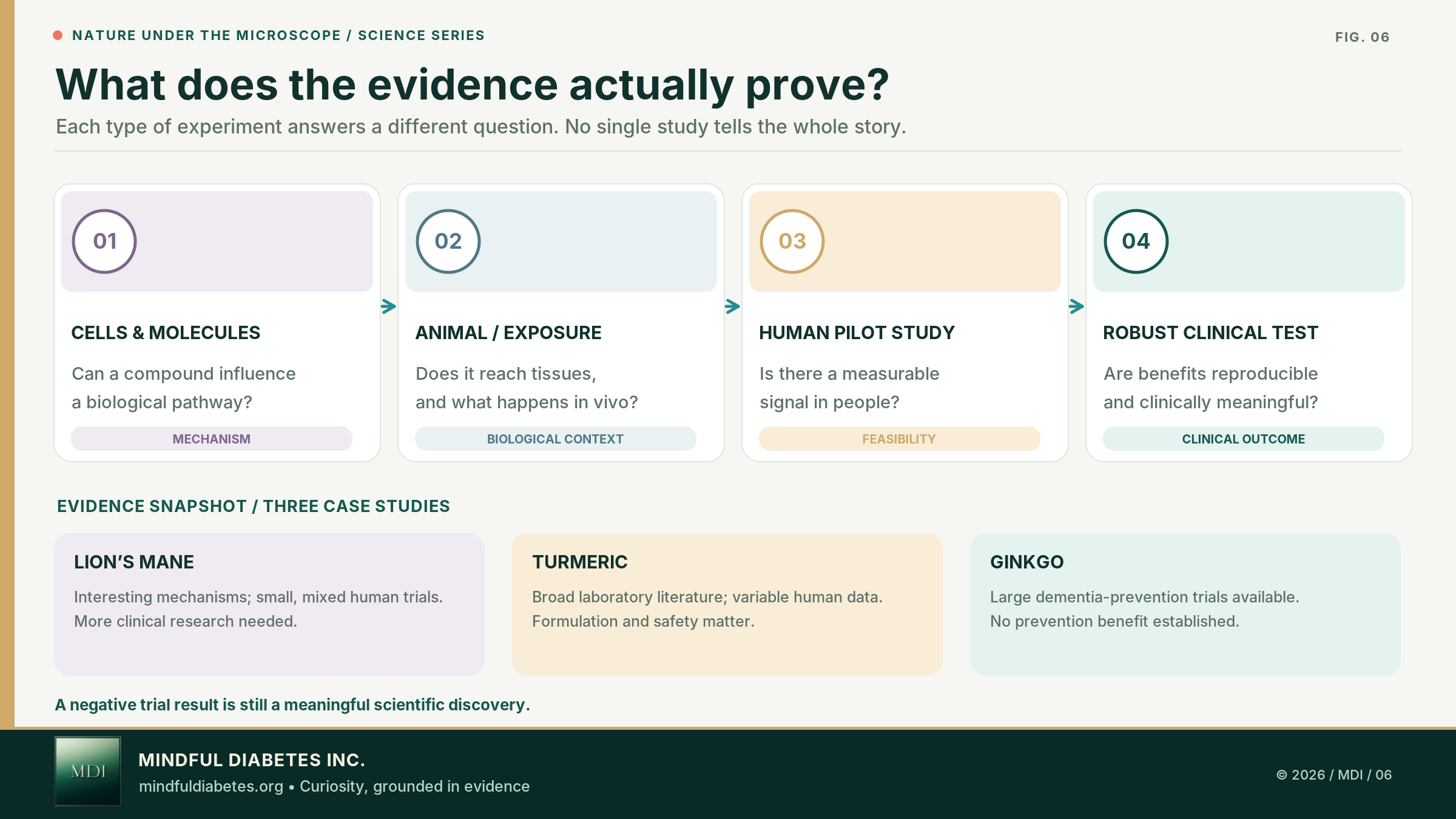
No single study type makes all the others unnecessary. A randomized clinical trial can tell us whether an intervention helped under tested conditions; it may not fully explain why. A beautiful molecular mechanism can explain a biological possibility; it cannot alone tell us whether a person benefited.
An at-a-glance comparison of the three natural products
| Substance | What makes it scientifically interesting? | What have human studies established? | What remains unanswered? |
|---|---|---|---|
| Lion's mane | Fungal metabolites and proposed neurotrophic signaling | Small, heterogeneous cognitive studies; mixed or inconclusive findings | Reproducible formulation, meaningful clinical outcomes, longer-term safety, dementia prevention |
| Turmeric / curcumin | Polyphenol chemistry, cellular signaling, and formulation science | Conflicting syntheses of small cognitive studies; no established dementia-prevention benefit | Reliable clinical effect, formulation dependence, exposure–response relationships, safety at higher exposure |
| Ginkgo biloba | Leaf metabolites, vascular and cellular hypotheses | Large randomized prevention studies have not demonstrated reduced dementia incidence | Whether selected preparations offer limited benefits for specific symptoms in defined populations; interactions and safety |
This is a comparison of current evidence for the outcomes discussed here, not a ranking of which product someone should buy. Research continues, and conclusions must be revisited when well-designed new data emerge.
9. Natural compounds are still pharmacologically active compounds
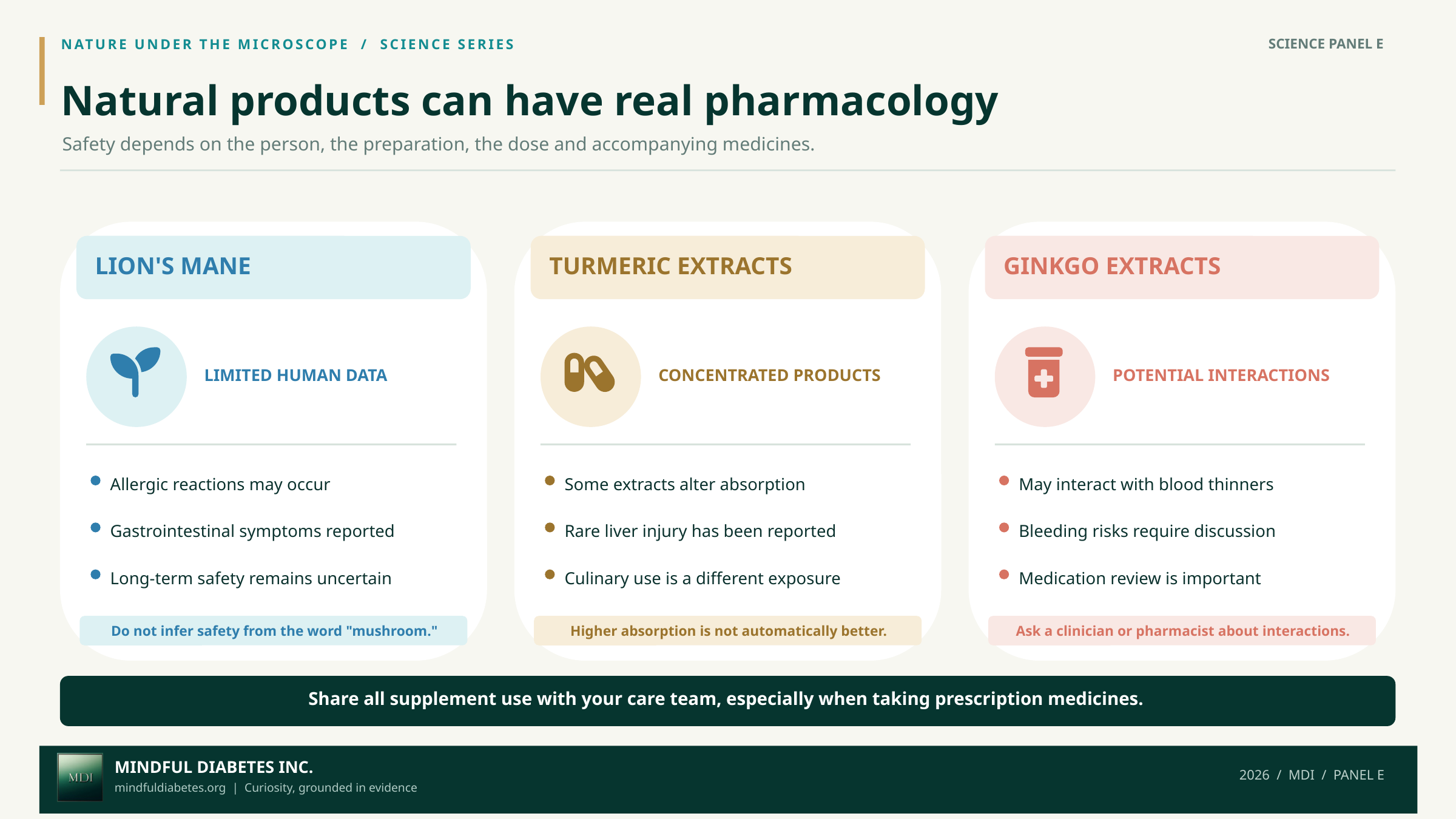
When a molecule can affect human biology, that possibility includes unintended effects and interactions. "Natural" describes origin, not a safety guarantee. This is especially important for people who already take medicine for diabetes, cardiovascular disease, clotting disorders, or other chronic conditions.
| Product or preparation | What to keep in mind | Practical safety conversation |
|---|---|---|
| Lion's mane preparations | Long-term human safety information is limited; gastrointestinal symptoms or allergic reactions are possible | Clarify the actual formulation, other ingredients, and your medical history with a healthcare professional |
| Concentrated turmeric / curcumin | Some products, including enhanced-absorption forms, have been associated with rare but potentially serious liver injury; products vary markedly in exposure | Discuss existing liver conditions, medicines, symptoms such as jaundice or dark urine, and whether a high-concentration product is appropriate |
| Ginkgo leaf extract | Ginkgo can interact with medicines, including potential bleeding concerns with anticoagulants; the plant's seeds are not equivalent to studied standardized leaf extracts | Review the full medication list, especially blood-thinning medicines, and avoid treating ginkgo as a dementia-prevention drug |
The U.S. Food and Drug Administration does not approve dietary supplements for safety and effectiveness before they are sold in the same way it approves medicines. Manufacturers have important safety and quality responsibilities, and the FDA can act against unlawful products, but "sold in a store" is not the same as "clinically proven." [17]
For people with diabetes, the American Diabetes Association's 2026 Standards of Care, recommendation 5.16, advises assessing supplement use and states that supplements such as micronutrients, herbs, or spices are not recommended for glycemic benefits. That is not a blanket claim that no supplement ever has a medical use; deficiencies and other specific indications require individualized care. It is a clear warning against treating these products as substitutes for evidence-based diabetes management. [18]
Do not stop or adjust prescribed medication because of an article or supplement advertisement. If you're considering an extract, take the specific product label and your medication list to a pharmacist or clinician. If you develop concerning symptoms while using a supplement, seek medical evaluation rather than trying to manage a possible adverse reaction on your own.
10. So what can we do for brain and metabolic health today?
After so many molecular possibilities, it's fair to ask whether anything practical emerges from the research.
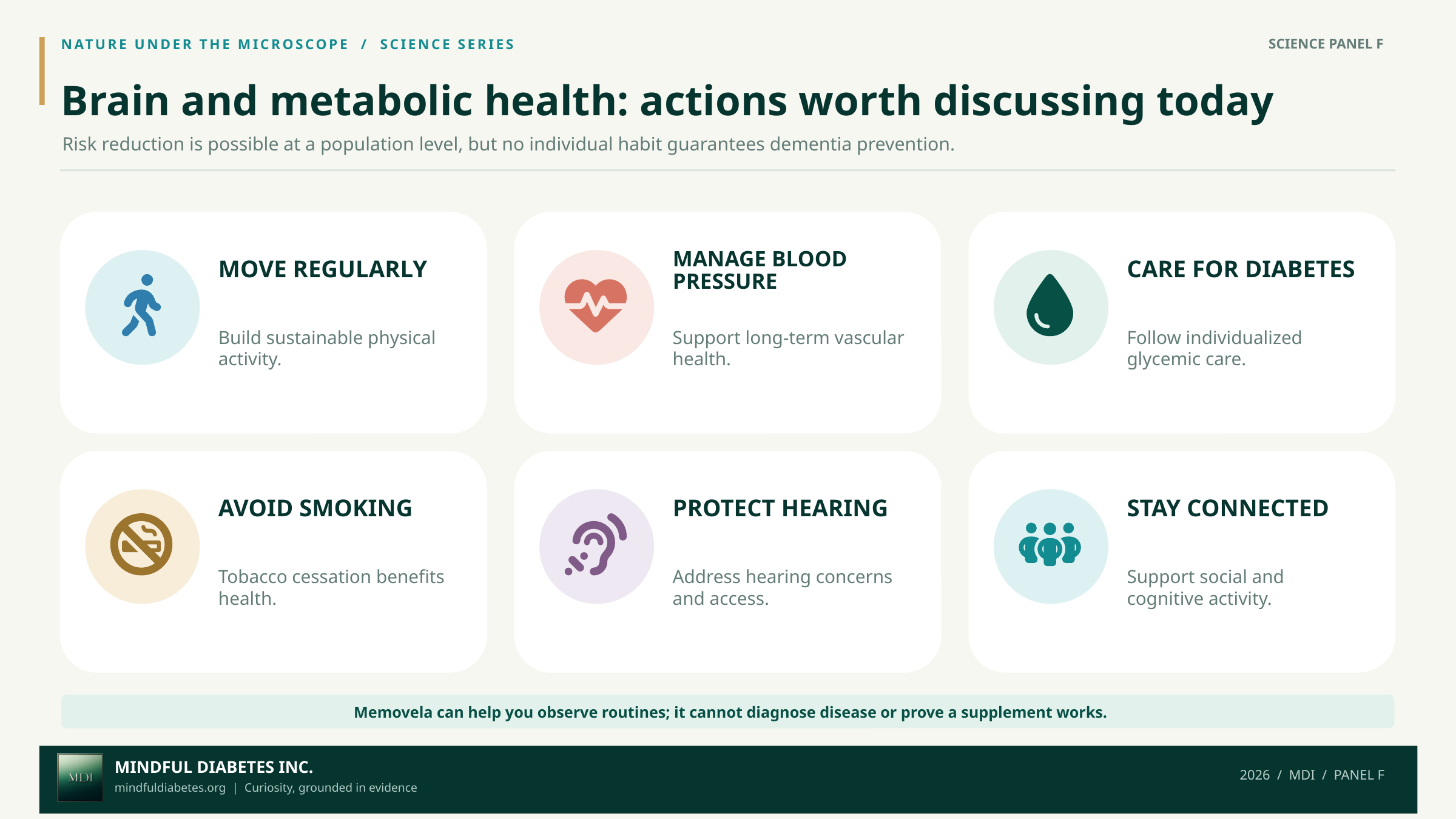
Yes—but the most evidence-informed actions are less glamorous than a single miracle ingredient. They involve care across the lifespan: managing blood pressure and diabetes with a healthcare team, staying physically active within one's abilities, avoiding smoking, addressing hearing and vision needs, supporting social connection, and considering broader cardiovascular risk.
The 2024 Lancet Commission identified 14 potentially modifiable risk factors for dementia across the population. Its estimates are not a promise that any individual can prevent dementia by following a checklist; risk is influenced by genetics, age, environment, access to care, and many other factors. But the commission makes a persuasive public-health case for paying attention to modifiable risks rather than relying on an unproven supplement. [19]
It can also help to think in terms of patterns rather than one perfect number or one perfect day. A meal does not occur in isolation; sleep, activity, stress, timing, medication, and underlying physiology all influence how the body responds. We explored that idea in Why the Same Meal Can Affect Your Body Differently Every Day. For an accessible food-pattern example, visit our DASH diet and blood-pressure guide.
Where Memovela fits—and where it does not
If you enjoy observing habits, Memovela can help you keep movement, meals, sleep, hydration, and daily check-ins in one place. Its value is helping you notice routines and prepare more useful questions for your own care team. It is not a diagnostic tool, cannot establish whether a supplement works, and cannot determine an individual's risk of dementia.
There is a meaningful distinction between tracking what happens in your daily life and running a controlled clinical experiment. Both can foster curiosity; only the second, with appropriate design, can establish an intervention's effect across a study population.
Frequently asked questions
Can lion's mane, turmeric, or ginkgo prevent Alzheimer's disease?
No convincing clinical evidence currently establishes any of these as a way to prevent Alzheimer's disease. Lion's mane studies are preliminary; curcumin studies are inconsistent; and large trials of ginkgo did not demonstrate prevention. A laboratory mechanism or a change on one cognitive test is not equivalent to preventing a clinically important disease outcome. [7] [10] [11] [12]
What is brain insulin signaling dysregulation?
It describes altered signaling through insulin-related pathways in the brain. It is a research concept, not a separate diagnosis of Alzheimer's disease, and it should not be used as a synonym for cerebral glucose hypometabolism, which concerns how glucose is utilized in particular brain regions. [3]
Does type 2 diabetes inevitably lead to dementia?
No. Type 2 diabetes is associated with elevated dementia risk at the population level, but many people with diabetes never develop dementia. Risk reflects multiple interacting processes, including vascular health and other factors, not an automatic progression from one diagnosis into another. [1]
Is turmeric in food the same as a curcumin supplement?
No. Culinary turmeric and concentrated extracts can differ substantially in dose, composition, absorption, and adverse-effect profile. The biological exposure from a high-concentration formulation is not interchangeable with using turmeric as a seasoning. [9]
Why can two meta-analyses reach different conclusions?
They may include different studies, combine different outcomes, or use different statistical decisions. When the underlying trials are relatively small and varied, those choices can change the pooled result. That's a reason to examine the study methods and the whole body of evidence, not simply select whichever headline sounds better. [10] [11]
Should I take a supplement if I'm concerned about my memory or diabetes?
An article cannot evaluate your medical history, medication interactions, or specific concerns. Discuss new memory symptoms or questions about supplements with your healthcare professional, particularly if you take prescription medication. Supplements should not replace evidence-based diabetes care or an appropriate evaluation of cognitive changes. [13] [17] [18]
The most important discovery may be how we ask questions
A mushroom that might affect a neuronal pathway. A golden compound with beautiful chemistry and difficult pharmacokinetics. An ancient tree tested in thousands of people, with a result that challenged a compelling hypothesis.
These are not disappointing stories. They are science working.
At Mindful Diabetes, we believe the wonder of biology becomes more valuable—not less—when we distinguish what scientists suspect, what experiments show, and what clinicians can responsibly recommend. Nature offers an extraordinary library of chemical possibilities. Careful research teaches us which pages of that library might eventually change lives.
Stay curious. Read beyond the headline. Ask what was measured. And remember that protecting brain and metabolic health is a broader, longer story than any single bottle.
---
Continue exploring with Mindful Diabetes
- Is Metabolic Syndrome Changing Your Brain Before You Notice? — a recent midlife brain-network study, explained carefully.
- How Fat Cells Store and Release Energy — a closer look at insulin, leptin, metabolic signaling, and the science of energy storage.
- Why the Same Meal Can Affect Your Body Differently Every Day — why metabolism is more than one glucose reading.
- DASH Diet: What the Evidence Says — a practical, science-informed eating pattern.
- Free Mindful Diabetes Guides — accessible guides and worksheets for everyday health choices.
Mindful Diabetes Inc. is a 501(c)(3) nonprofit that makes evidence-informed health education and tools available to the public. Subscribe to our newsletter or support our educational work using the existing site controls below this article.
Medical and editorial note: This content is for general education and does not provide individual medical advice, diagnosis, or treatment. Research statements describe the cited study conditions and populations, not promises of benefit for every reader. Do not start, stop, or change medication based on this article. The evidence review reflects literature checked through October 28, 2026; new findings may change the picture.
Editorial history: This completely rewritten article replaces an earlier Mindful Diabetes article first published January 28, 2025.
Scientific references
1. de Leijer JF, Biessels GJ, Visseren FLJ, van Sloten TT, et al. Dementia in type 2 diabetes: risk factors, disease processes and opportunities for prevention across the lifespan. Diabetologia. 2026. Read the review.
2. Cognitive decline and diabetes: a systematic review of the neuropathological correlates accounting for cognition at death. 2022. PubMed. See also Abner EL, et al. Diabetes is associated with cerebrovascular but not Alzheimer's disease neuropathology. PubMed.
3. Milstein JL, Ferris HA. The brain as an insulin-sensitive metabolic organ. Molecular Metabolism. 2021. Open-access review.
4. Yuan Y, Zhao G, Zhao Y. Dysregulation of energy metabolism in Alzheimer's disease. Journal of Neurology. 2025. Read the review.
5. Spangenberg ET, et al. Unveiling the role of erinacines in the neuroprotective effects of Hericium erinaceus: a systematic review in preclinical models. Frontiers in Pharmacology. 2025. PubMed.
6. Effect of erinacine A-enriched Hericium erinaceus supplementation on cognition: a randomized, double-blind, placebo-controlled pilot study. Journal of Functional Foods. 2024. DOI.
7. Surendran G, et al. Acute effects of a standardised extract of Hericium erinaceus on cognition and mood in healthy younger adults: a double-blind randomised placebo-controlled study. Frontiers in Nutrition. 2025. DOI.
8. Evans C, et al. A pilot proof-of-concept study to evaluate the physiological and cognitive impacts of Hericium erinaceus on healthy adults. Nutrients. 2026. DOI.
9. National Library of Medicine / NIDDK. Turmeric. LiverTox: Clinical and Research Information on Drug-Induced Liver Injury. Updated June 16, 2025. Read LiverTox.
10. Wang W, Zhao R, Liu B, Li K. The effect of curcumin supplementation on cognitive function: an updated systematic review and meta-analysis. Frontiers in Nutrition. 2025. DOI.
11. Targeting cognitive aging with curcumin supplementation: a systematic review and meta-analysis. The Journal of Prevention of Alzheimer's Disease. 2025. PubMed.
12. DeKosky ST, et al. Ginkgo biloba for prevention of dementia: a randomized controlled trial. JAMA. 2008;300:2253–2262. DOI.
13. National Center for Complementary and Integrative Health. Ginkgo: Usefulness and Safety. NIH evidence overview.
14. Snitz BE, et al. Ginkgo biloba for preventing cognitive decline in older adults: a randomized trial. JAMA. 2009. PubMed.
15. Bailey CJ. Metformin: historical overview. Diabetologia. 2017;60:1566–1576. DOI.
16. National Institute of Diabetes and Digestive and Kidney Diseases. Story of discovery: how different medications for diabetes and obesity emerged from basic research on one pancreatic hormone. 2021. NIDDK.
17. U.S. Food and Drug Administration. Questions and Answers on Dietary Supplements. FDA.
18. American Diabetes Association Professional Practice Committee. 5. Facilitating Positive Health Behaviors and Well-being to Improve Health Outcomes: Standards of Care in Diabetes—2026. Diabetes Care. DOI. See recommendation 5.16 on supplements and glycemic benefits.
19. Livingston G, et al. Dementia prevention, intervention, and care: 2024 report of the Lancet standing Commission. The Lancet. 2024. PubMed.