
What you’ll learn
The nutrition label tells an important story—but not the entire one. A 2026 experiment offers a closer look at insulin, metabolism, the brain, and sensible holiday eating.
Holiday food comes in many forms, from homemade dishes to convenient packaged favorites. The question is not whether one cookie is good or bad. It is what happens when different kinds of food reach our digestive and metabolic systems.
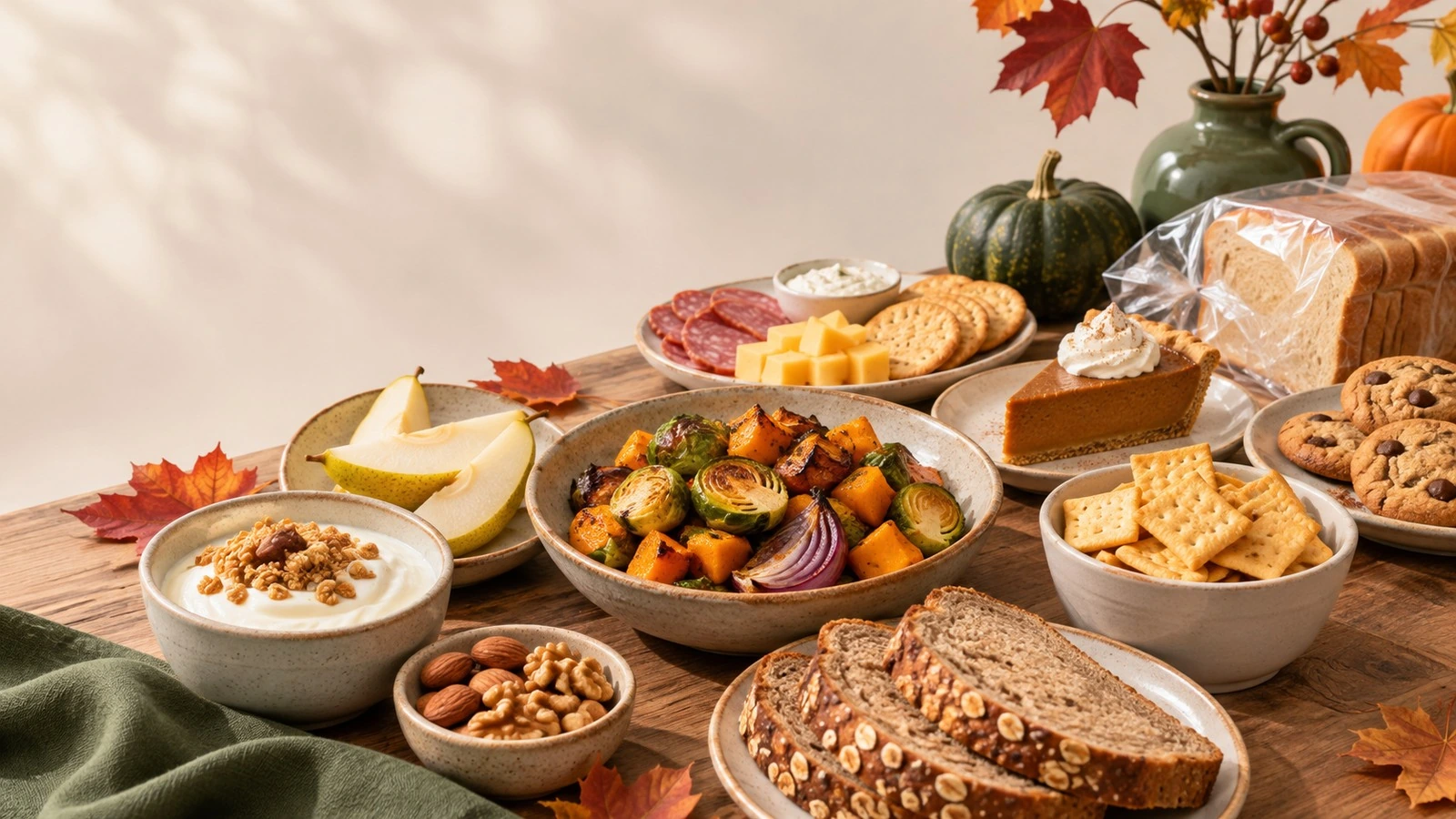
Picture a holiday gathering. There is roasted squash, a tray of fruit, homemade bread, a platter of crackers and cheese, packaged appetizers, and something sweet waiting for dessert.
You could compare the calories, carbohydrate, protein, fat, and fiber on the nutrition labels—or estimate those quantities for the homemade dishes. Those numbers would tell you something important. But would they tell you everything about how your body will respond?
A study published October 5, 2026, in Nature Metabolism suggests the answer is no. Researchers at Virginia Tech compared two meals matched extraordinarily closely for their nutritional composition. One meal was classified as ultra-processed, the other was not. The participants' overall blood glucose responses were not significantly different, yet the ultra-processed meal produced a larger insulin response. The team also observed differences in how the body used fuel and investigated associations with the brain's response to pictures of food. 1
The discovery is worth exploring, especially when convenience foods and big meals become part of the holiday season. But it is not a reason to fear processed food, cancel dessert, or conclude that one meal causes diabetes.
It is an invitation to understand food more deeply.
The short answer
What the researchers found: In a small, short-term randomized crossover experiment, a roughly 300-calorie ultra-processed meal produced a significantly larger insulin response than a non-ultra-processed meal closely matched for calories and many measured nutritional characteristics. Total glucose exposure during the three-hour post-meal observation was not significantly different. Researchers also identified differences in energy expenditure and fuel use, and associations between metabolic responses and activity in brain regions involved in responding to food cues. 1
What they did not find: The experiment did not show that an individual packaged food causes diabetes, that every ultra-processed food behaves identically, or that holiday indulgence damages the brain. It did not test people with diagnosed diabetes, long-term health outcomes, or a repeated holiday eating pattern. 1
First, what does “ultra-processed” actually mean?
Food processing is not a single thing.
Washing fruit is a form of processing. Freezing vegetables is a form of processing. Cooking beans, grinding grain, making yogurt, pasteurizing milk, and baking bread all change food in different ways. Those changes can make food safer, more practical, or easier to digest.
The NOVA classification system distinguishes four broad groups, from unprocessed or minimally processed foods to ultra-processed formulations. Ultra-processed foods typically contain ingredients or industrial additives not commonly used in home cooking, and may be engineered for convenience, consistency, shelf stability, or particular sensory qualities. 1, 5
The category includes many familiar products: some packaged snacks, instant meals, soft drinks, certain breakfast cereals, and some commercially manufactured breads. Crucially, NOVA is a processing classification, not a complete nutritional score. A sugar-sweetened drink and a fiber-rich fortified food can both meet ultra-processed criteria while differing substantially in nutritional quality. 5
This matters because a sensible food decision rarely fits into a single label. Ingredients, fiber, protein, sodium, added sugar, affordability, food access, medical needs, and the overall dietary pattern are all relevant.
The experiment: two meals that looked different on the plate but similar on paper
The researchers recruited 57 healthy-weight adults. Thirty-two participants completed both metabolic testing sessions, while 52 completed a separate functional MRI session. The participants were young on average, with a mean age of about 26 years. 1
For the metabolic experiment, each of the 32 participants consumed both meal types on separate days, with the order randomized. This is a crossover design: rather than comparing two entirely different groups of people, the investigators could observe how the same participant responded to each meal.
Both test meals provided approximately 300 calories. Researchers matched them closely for calories, weight, energy density, protein, carbohydrate, fat, available carbohydrate, fiber, sodium, water, and estimated glycemic index and load. Reported deviations were at most 1.6% across these matched properties. 1
The ultra-processed meal included small portions of a peanut-butter-and-jelly sandwich, deli turkey, vegetable chips, a cookie, cereal, and instant mashed potatoes. The non-ultra-processed meal included banana, dried cranberries, cheese, and egg. Those are descriptions of the actual research meals—not an instruction to recreate them at home. 2
Science-corrected schematic — verified blood draws: baseline −60 min; +5, +20, +40, +60, +90, +120, +180 min. Sequence allocation is not reported.
Participants arrived after an overnight fast, rested inside a metabolic chamber, then ate their assigned test meal within ten minutes. Researchers collected blood samples and tracked energy expenditure and fuel oxidation over roughly three hours after eating. The metabolic chamber measured oxygen use and carbon dioxide production to help estimate how the body was using carbohydrate and fat. 1, 2
Notice the power—and the limitation—of this setup. Nutritional matching strengthens the comparison. But the two meals still differed in food ingredients, protein sources, textures, and additives. The experiment could reveal a difference between these meal combinations; it could not isolate which specific manufacturing step caused it.
The surprising result: glucose looked similar overall, but insulin did not
After a meal, carbohydrates are digested and absorbed, blood glucose may rise, and the pancreas releases insulin. Among its many functions, insulin helps coordinate glucose uptake and storage and regulates how the body uses available fuel.
The team measured both blood glucose and insulin repeatedly.
When researchers summarized total post-meal glucose exposure as the area under the curve, there was no statistically significant difference between the meals (P = 0.92). That does not mean the glucose curves were identical at every moment. The non-ultra-processed condition had higher glucose at 20 minutes, and the curves differed in shape over time. 1
The insulin results were different. The ultra-processed condition produced a significantly larger insulin area under the curve (P < 0.001), with higher measured concentrations at multiple time points between 40 and 120 minutes. By 180 minutes, insulin in both conditions had returned near baseline. 1
Conceptual schematic — curves, points, axes and timings are not measured data.
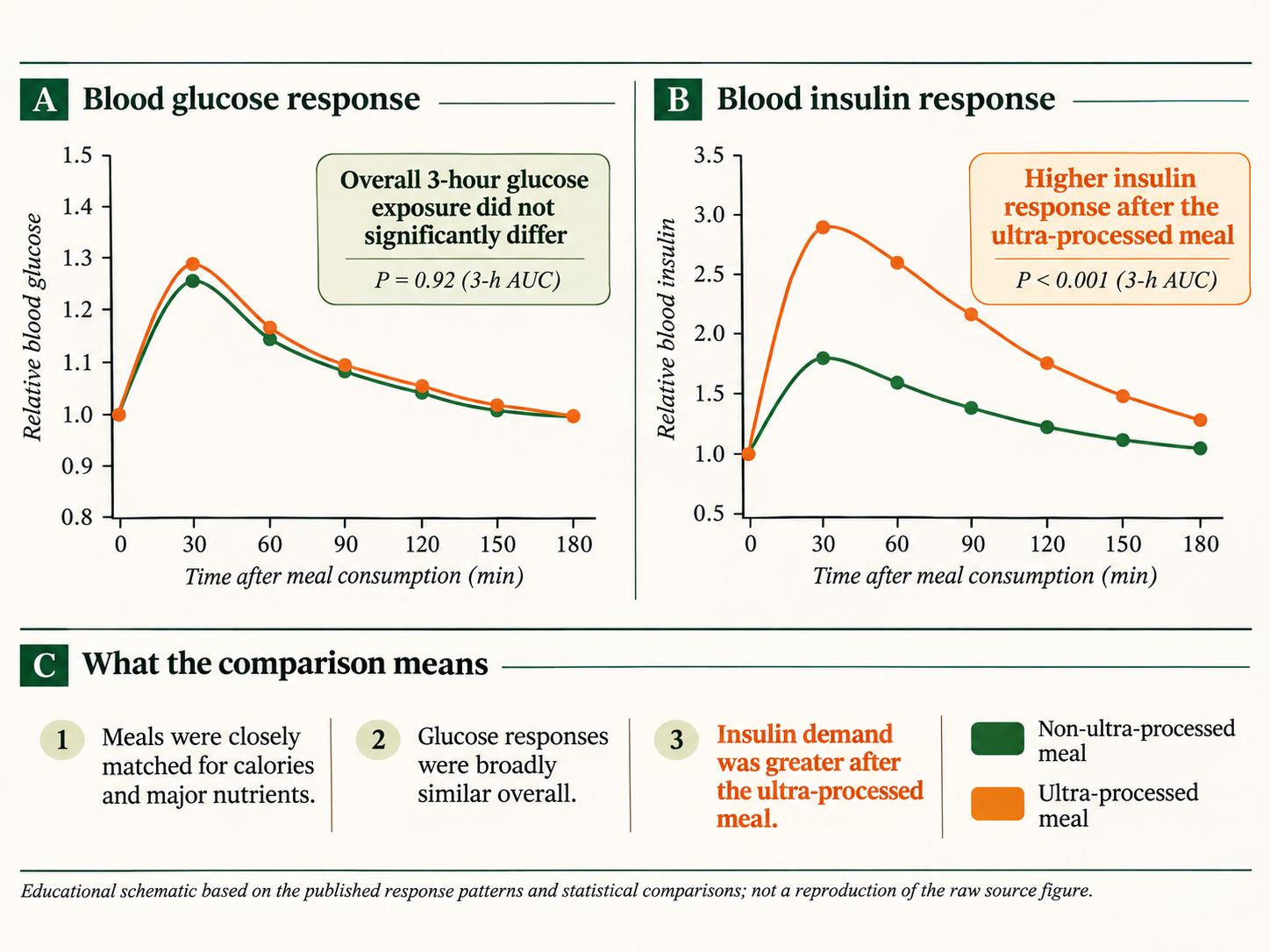
That distinction is the central scientific surprise.
A blood glucose measurement tells us about glucose concentration. It does not directly reveal how much insulin the pancreas has secreted or how other tissues are responding. Glucose and insulin are related, but they are not interchangeable biomarkers.
Does that mean the ultra-processed meal caused insulin resistance?
Not necessarily.
An acute increase in insulin after one meal is not, by itself, a diagnosis of insulin resistance or a signal of harm. Insulin responses depend on the mix of absorbed nutrients, digestive processes, gut hormones, baseline physiology, and many other factors. The researchers discuss whether the response is consistent with a relative change in insulin sensitivity, but this experiment did not directly establish chronic insulin resistance or determine a causal mechanism. 1
For a person using a continuous glucose monitor, the distinction is particularly important. A CGM measures glucose in interstitial fluid, not circulating insulin. A relatively ordinary-looking glucose trace does not mean the body's entire post-meal hormonal response is known.
That is not an argument that everyone needs insulin testing. It is a reminder that biology is larger than any one measurement.
For more on why glucose responses can vary—even to a seemingly identical meal—see our earlier article, Why the Same Meal Can Affect Your Body Differently Every Day.
What was happening to the body's fuel use?
The researchers also studied energy expenditure and which fuels were being oxidized after the meals.
Relative to the non-ultra-processed condition, the ultra-processed meal was associated with a greater post-meal energetic response and reduced carbohydrate oxidation, alongside changes in fat oxidation. In other words, the body did not handle the two meals identically even though their measured nutritional totals were closely matched. 1
Energy expenditure after eating is sometimes called the thermic effect of food: digestion, absorption, metabolism, and storage all require energy. Fuel oxidation asks a different question: what portion of the body's immediate energy demand is being met by carbohydrate versus fat?
These measures do not reduce to “better” or “worse.” A larger acute rise in energy expenditure does not establish that the food leads to weight loss. Likewise, a short-term difference in fuel use does not demonstrate a long-term disease outcome.
One hypothesis is that changes in food structure may affect the timing or location of nutrient availability in the digestive tract. Researchers are interested in whether that changes signals traveling from the gut to other organs, including the brain. That explanation is plausible, but the physical breakdown and absorption mechanism was not directly proven in this experiment. 1, 2
The food matrix: why the same nutrient totals might not tell the whole story
Think about two meals that both contain carbohydrate, fat, and protein.
In one, the nutrients remain embedded in recognizable plant or animal tissues: intact cells, fibers, proteins, and layered structures. In another, some components may have been milled, dispersed, recombined, extruded, emulsified, or otherwise reformulated.
The food matrix refers to the physical structure and interactions that surround nutrients. The matrix can influence chewing, the formation of the swallowed food bolus, digestive enzyme access, and the rates at which different constituents become available for absorption. Processing can change those features—sometimes substantially. 1
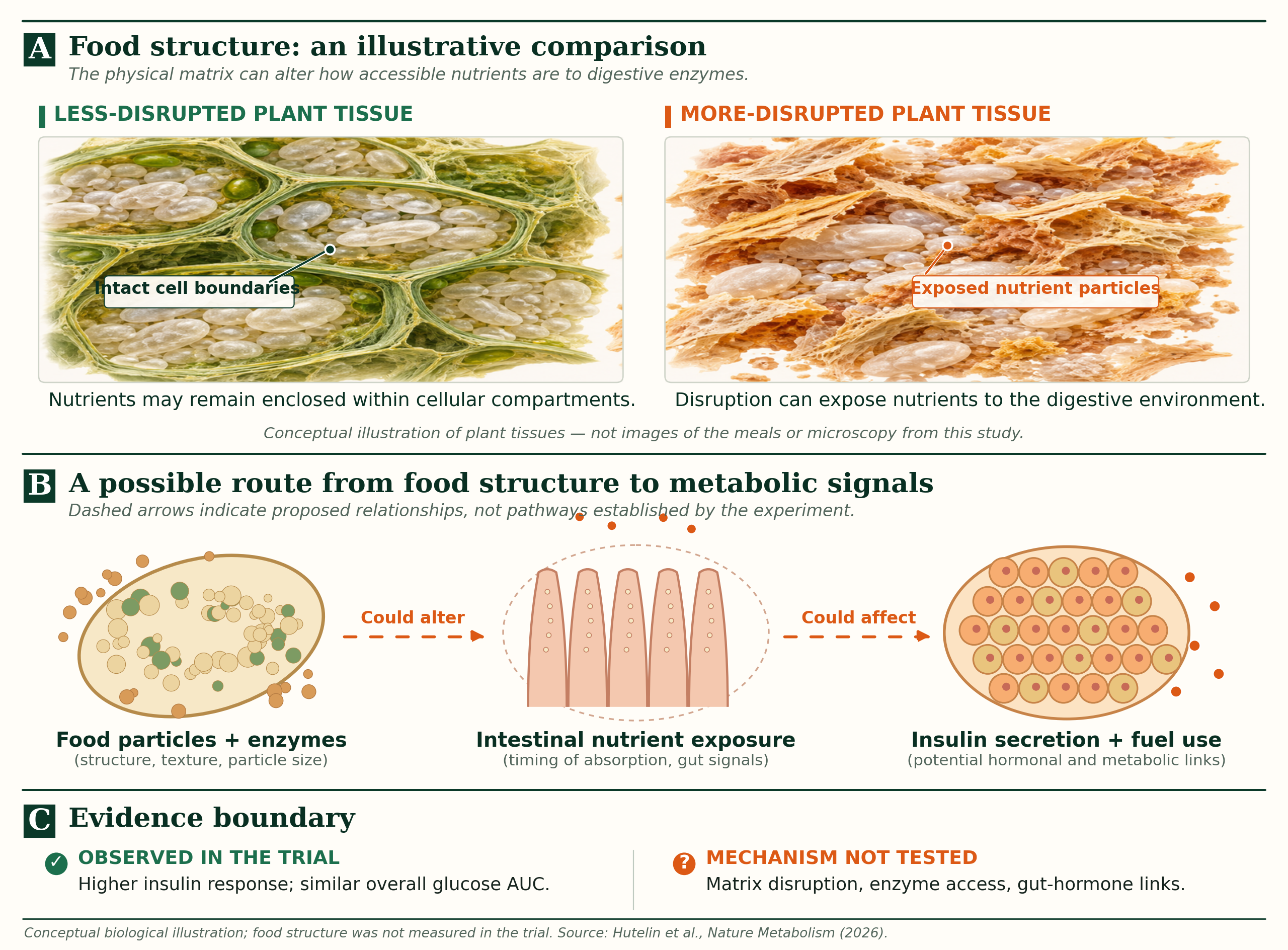
This is the deeper reason the study matters. Nutrition labels are useful. Calories and macronutrients matter. But the chemistry and physical organization of food may also influence how the body processes what we eat.
There are important unanswered questions, however. Was the effect related to texture? Ingredient differences? Specific additives? Protein source? The combination of many properties? We cannot assign the finding to any single component based on this study alone.
Then the researchers looked at the brain—but not in the way some headlines suggest
The study also involved functional magnetic resonance imaging, or fMRI, a technique that estimates regional changes in brain activity through blood-oxygenation signals.
During a separate imaging session, participants viewed pictures of foods classified as ultra-processed or non-ultra-processed and indicated how much they would be willing to pay for each item. The researchers then examined whether brain responses to those food images were associated with the metabolic measures from the meal experiment. Fifty-two people completed fMRI, with 29 contributing to specific combined metabolic-and-brain analyses reported in the paper. 1
They identified associations between differences in peak carbohydrate oxidation (and related respiratory-exchange measures) and fMRI food-cue responses in regions including the striatum and superior temporal gyrus. Importantly, differences in blood insulin itself were not significantly associated with the fMRI food-cue contrast in this analysis. Other imaging analyses suggested that the neural representation of food value depended on the food category, even though participants' overall willingness to pay did not differ significantly between the categories. 1, 2
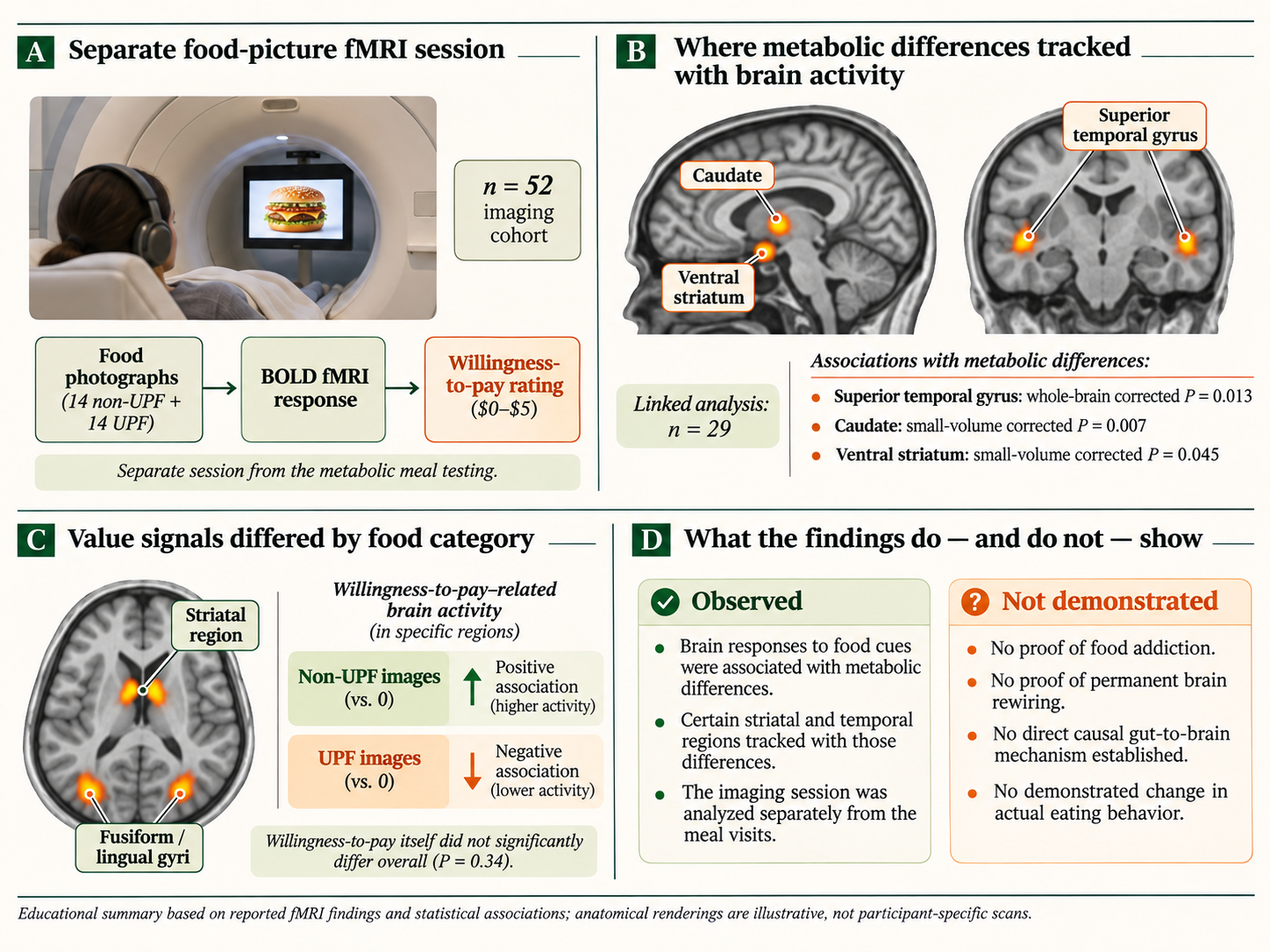
There is a crucial difference between an association involving brain activity and evidence that eating a particular food directly changes the brain in a lasting way. These were not brain scans demonstrating that a single meal “rewired” a participant. And the results do not prove addiction.
The finding is still intriguing. It adds a possible piece to the puzzle of how the body learns about food and assigns it value—but future studies will need to test which signals are involved and whether those signals change eating behavior over time.
How does this fit with the bigger research picture?
The 2026 experiment investigated a possible mechanism. Other trials have tested longer-term eating behavior or body weight.
In a closely controlled National Institutes of Health study published in 2019, 20 adults spent two weeks eating an ultra-processed diet and two weeks eating a minimally processed diet. The meals offered were designed to be comparable on several nutritional measures, but participants could eat as much or as little as they wished. On the ultra-processed diet, they ate roughly 500 more calories per day on average and gained weight; the pattern reversed during the minimally processed period. 3
A separate randomized crossover trial published in Nature Medicine in 2025 provided diets that both followed the UK's healthy eating guidance. Fifty-five adults were randomized, and 50 contributed to the intention-to-treat analysis. After eight weeks, participants lost weight on both diets, but average weight loss was greater on the minimally processed diet: approximately 2.06% versus 1.05%. 4
These trials are not interchangeable. The 2019 study examined free food intake in a tightly controlled residential setting. The 2025 study compared two dietary patterns over eight weeks. The 2026 study investigated metabolic and brain-related responses to one pair of short meals. Together, they suggest that processing deserves attention alongside familiar nutritional measures—not that every product in a broad food category has the same biological effect.
A 2026 review also highlighted that associations with cardiometabolic outcomes differ among ultra-processed food subgroups. Processed meats and sweetened drinks do not have the same nutrient profiles or evidence base as all fortified cereals, whole-grain breads, or plant-based alternatives. Classification alone is too blunt to replace informed food choices. 5
What this means for Thanksgiving and the holiday season
The holiday table is not a laboratory. And that is exactly why the practical message should be flexible.
The researchers did not test Thanksgiving dinners, reheated leftovers, festive desserts, or families eating together. No result in this study tells us that homemade pie is metabolically harmless or that packaged crackers are automatically dangerous. Nor does it show that one holiday meal changes future diabetes risk.
Instead, the research offers a reason to think about food quality and food structure across the broader pattern of eating.
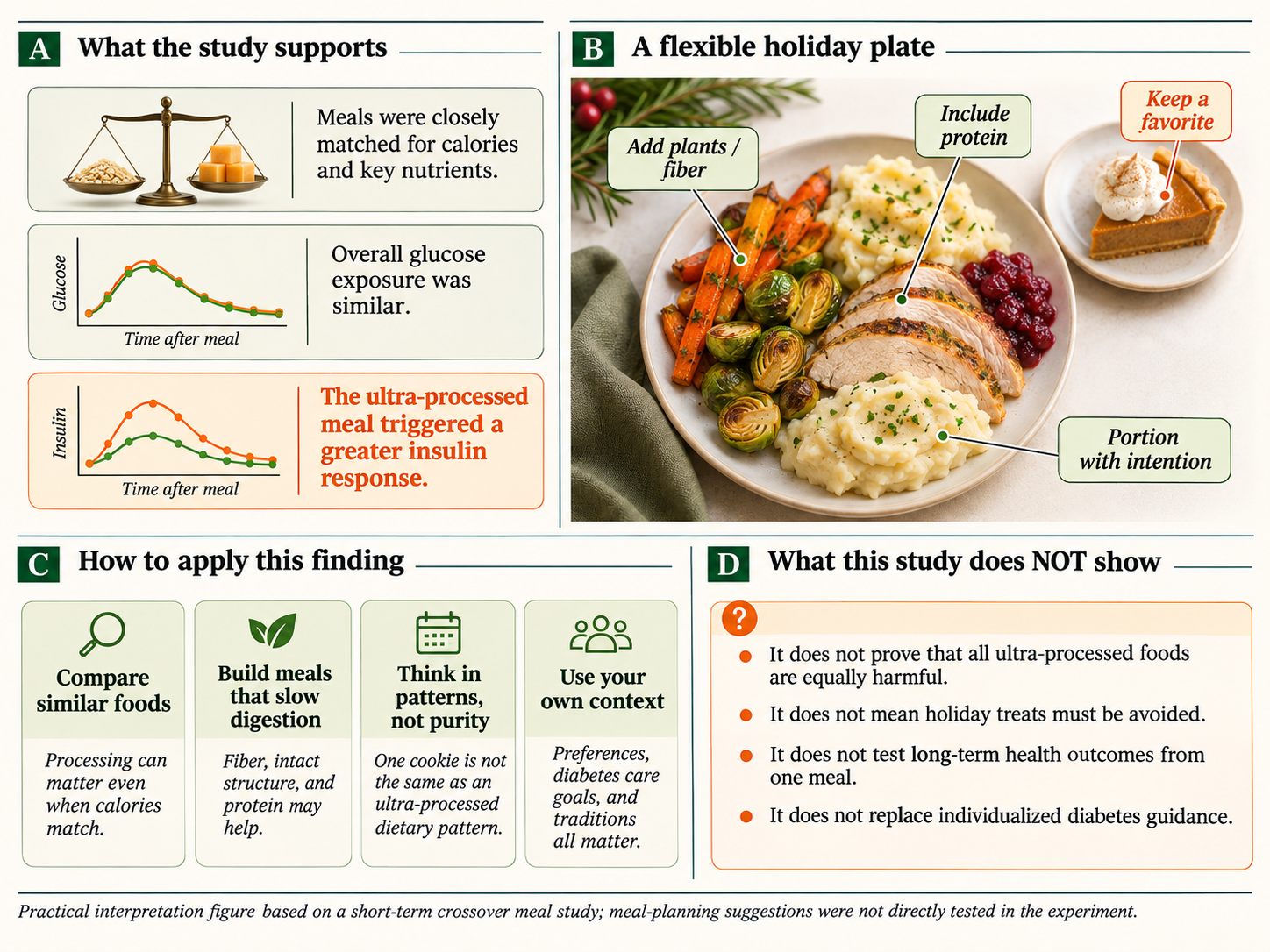
Five ways to use this science without overcomplicating the holidays
1. Let familiar foods do some of the work. If you are putting together a starter platter, fruit, vegetables, nuts, cheese, hummus, and other satisfying foods can sit alongside crackers or packaged favorites. A meal does not need to be entirely homemade to be worthwhile.
2. Think about additions as much as substitutions. Roast extra vegetables, serve a bean-based side dish, or add a fruit option to dessert. Adding fiber-rich foods and varied ingredients can be easier—and more welcoming—than asking everyone to avoid a long list of products.
3. Use nutrition labels, but do not stop at the front of the package. Compare fiber, sodium, added sugars, protein, serving size, and ingredients among foods that meet the same practical need. The words “natural,” “artisan,” or “homemade-style” do not substitute for evidence.
4. Keep the foods you actually love. A favorite holiday recipe can belong in an otherwise nourishing pattern. Eating is also social and cultural. The CDC explicitly encourages people with diabetes to enjoy favorite holiday treats in moderation rather than turning food into a forbidden list. 7
5. If you have diabetes, respect your own care plan. Carbohydrate portions, glucose monitoring, medication timing, and hypoglycemia prevention may matter much more to an individual holiday meal than a product's NOVA classification. Avoid skipping meals to “save up” for a feast if doing so could disrupt your glucose management. The CDC recommends planning ahead and continuing prescribed monitoring. 7
The American Heart Association's 2026 dietary guidance emphasizes the overall eating pattern, vegetables and fruits, whole grains, healthy protein and fat sources, less added sugar and sodium, and choosing minimally processed foods more often when feasible. That is compatible with convenience, celebrations, and real life. 6
A small holiday experiment: notice a habit, not a verdict
Here is a useful challenge that does not require a glucose sensor or a perfect menu: choose one addition or routine for the next few holiday gatherings.
Perhaps you include a vegetable side dish before dessert. Perhaps you make fruit and nuts easy to reach at the afternoon gathering. Perhaps you spend a little more time enjoying the meal instead of eating while rushing through preparation.
The aim is not to prove that any one choice changes insulin or prevents disease. A single meal cannot establish that. The aim is to find a habit that makes nourishing food more accessible and enjoyable.
Mindful Diabetes' Memovela wellness tool can support simple habit check-ins and reflection without turning your holiday meal into a medical experiment. And if you want a deeper look at flexible meal construction, our DASH diet evidence guide explores a broader dietary pattern backed by controlled feeding research.
What the study still cannot tell us
This is promising research, but its limits deserve to be stated plainly:
- One pair of meals: The experiment does not establish how every ultra-processed food compares with every minimally processed food.
- Ingredients were different: The investigators matched many nutritional measurements, not every chemical and physical property or protein source.
- Small, young, healthy-weight sample: The metabolic crossover involved 32 adults, which limits generalization to older adults, children, and people with diabetes.
- Short observation: Measurements followed a single meal over hours, not months or years.
- No direct proof of mechanism: Physical food structure and nutrient availability are plausible explanations, not verified causal links from this experiment.
- Brain findings were associative: The fMRI tests used pictures of food on a separate day and do not demonstrate addictive behavior or lasting brain change.
These caveats do not make the study unimportant. They show researchers exactly what needs to be tested next. 1, 2
What scientists need to test next
A single matched-meal experiment can identify acute physiological differences, but not explain which manufacturing features produced those differences or what happens after months and years of exposure. Researchers can build on this trial by directly measuring food structure and digestion, comparing more tightly controlled ingredients and protein sources, and following more diverse groups, including people with different metabolic health profiles. Longitudinal studies would then need to test whether any repeated biological differences translate into meaningful health outcomes. 1
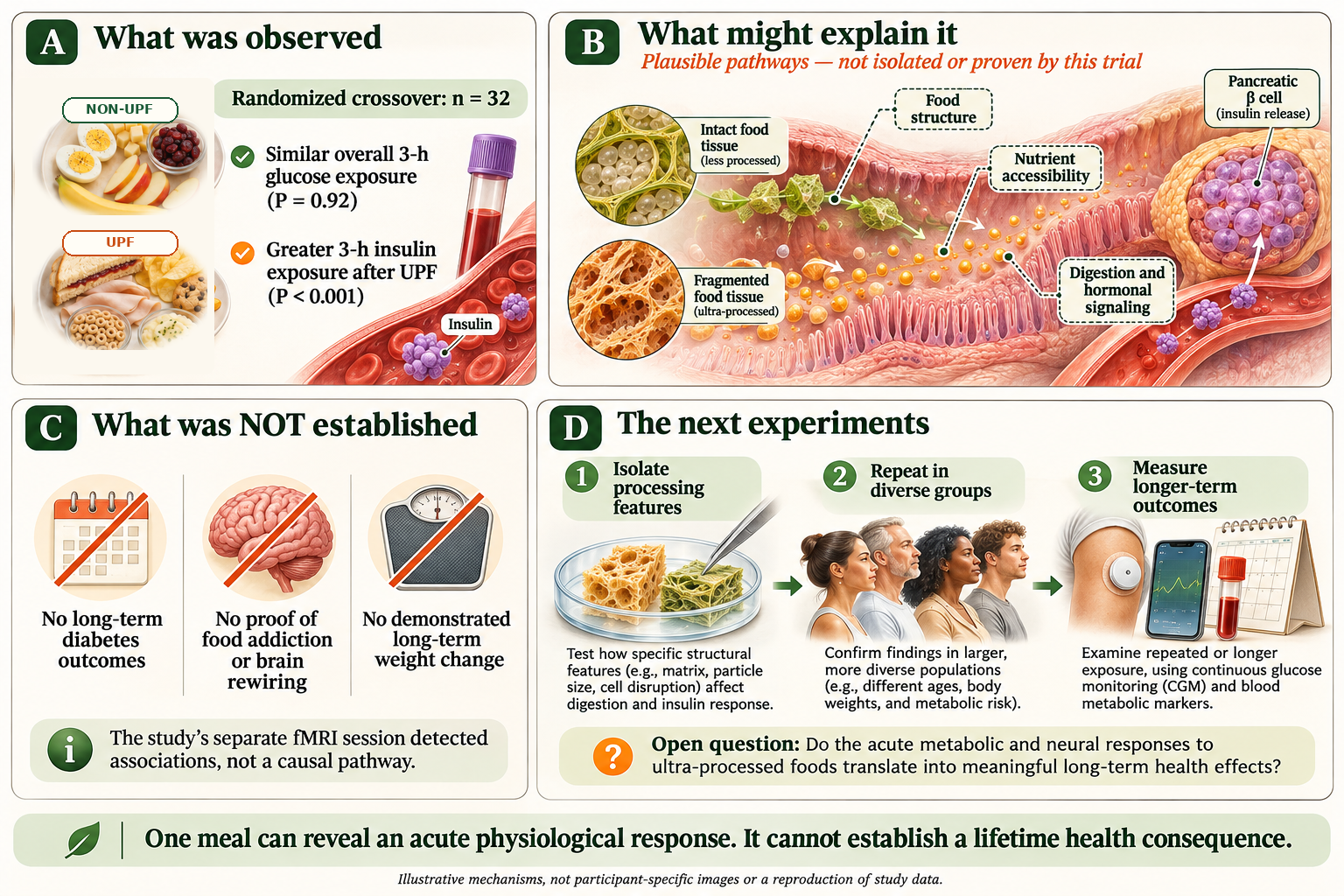
The most important distinction is what we observed versus what we can conclude. This study describes a short-term response to two closely matched test meals; it cannot establish a lifetime health consequence from one meal.
Frequently asked questions
Are all ultra-processed foods unhealthy?
No. Ultra-processed is a category describing formulation and processing, not a complete measure of nutrient quality. Many products commonly classified as ultra-processed are poor everyday nutritional choices, but others provide useful nutrients or fill important practical needs. Compare foods within the category rather than assuming they are identical. 5
If a processed meal produces more insulin, does that mean it causes diabetes?
No. The 2026 trial measured an acute post-meal response, not diabetes incidence. Greater insulin after a meal can have several possible explanations and does not on its own diagnose insulin resistance. 1
Can a continuous glucose monitor detect the effect in this study?
Not directly. CGMs measure glucose in interstitial fluid. They do not measure insulin, energy expenditure, or how much carbohydrate the body is oxidizing. The central finding was a difference in insulin response despite no significant difference in total measured glucose exposure. 1
Should I avoid packaged foods over the holidays?
Not categorically. Favor nourishing foods and an overall healthy pattern when feasible, but convenient foods and cherished treats can still have a place. For someone managing diabetes, their individualized eating and medication plan remains the priority. 6, 7
The bottom line
The nutrition label is useful. Calories matter. Carbohydrates, protein, fat, fiber, and sodium matter.
But an October 2026 experiment reminds us that those numbers may not capture every way a meal interacts with the body. Two closely nutrient-matched meals produced different insulin and metabolic responses—and possible connections to how the brain responds to food cues. 1
The next scientific challenge is to identify precisely which features of processing cause which effects, in which people, over what time frame.
Until then, the most useful holiday message is neither fear nor perfection. Enjoy your favorite foods. Make room for nourishing staples. Think about patterns rather than isolated bites. And stay curious about the biology behind what we eat.
Research and guidance cited
- Hutelin Z, Ahrens M, Baugh ME, et al. Metabolic and neural responses to ultraprocessed foods: a randomized, controlled, crossover study. Nature Metabolism. Published October 5, 2026; 8:2152–2164. https://doi.org/10.1038/s42255-026-01619-4. Primary study.
- Virginia Tech. Food processing influences metabolism and brain activity. October 5, 2026. https://news.vt.edu/articles/2026/10/research_fralinbiomed_upfhutelin.html. Study team reporting and meal descriptions.
- Hall KD, Ayuketah A, Brychta R, et al. Ultra-processed diets cause excess calorie intake and weight gain: an inpatient randomized controlled trial of ad libitum food intake. Cell Metabolism. 2019;30:67–77.e3. https://doi.org/10.1016/j.cmet.2019.05.008.
- Dicken SJ, Jassil FC, Brown A, et al. Ultraprocessed or minimally processed diets following healthy dietary guidelines on weight and cardiometabolic health: a randomized, crossover trial. Nature Medicine. 2025;31:3297–3308. https://doi.org/10.1038/s41591-025-03842-0.
- Kahleova H, Himmelfarb J, Barnard ND. Not all ultra-processed foods are created equal: a review. BMJ Nutrition, Prevention & Health. 2026. https://doi.org/10.1136/bmjnph-2025-001358.
- Lichtenstein AH, Khera A, Anderson CAM, et al. 2026 Dietary guidance to improve cardiovascular health: a scientific statement from the American Heart Association. Circulation. March 31, 2026. https://doi.org/10.1161/CIR.0000000000001435.
- Centers for Disease Control and Prevention. Healthy Eating and the Holidays. Updated May 15, 2024. https://www.cdc.gov/diabetes/healthy-eating/5-healthy-eating-tips-holidays.html.
Mindful Diabetes publishes educational content, not individualized medical advice. People with diabetes or other medical conditions should follow guidance from their own healthcare team, particularly for medication and glucose management.